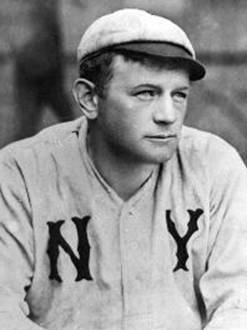
Monday, June 05, 2023

Alt-1921 Preview


It's Opening Day for Alt-1921, so it's time for a quick look forward!  In real 1921, the Yankees won their first pennant and were bested by the New York Giants in the World Series. Here, the Yankees are looking to win their third pennant in four years and repeat as champions, while the Giants haven't been to a World Series since 1913 (I suppose Alt-1913 = 1913 as far as the algorithm is concerned, though there are obviously huge differences in all sorts of things since baseball was integrated in 1915 if not earlier, which is a whole other philosophical/world building rabbit hole).

The algorithm thinks the Yankees will follow up their 115-win season with a 103-win campaign, with them finishing in 2nd place, 5 games behind Boston. 

It sees Heilmann flirting with .400 again, but Ruth with another gargantuan year and presumably an MVP. It sees Eddie Cicotte as a 31-game winner, with Dutch Leonard close behind with 27. No Yankees make the list of predicted best pitchers, though the best hitters list is littered with them.

Over in the NL, it's the Brooklyn Robins who are predicted to come in first place with 97 wins, comfortably ahead of the apparently-resurgent Boston Rustlers. The Orioles are predicted to come in a strong 3rd. The Robins are expected to be led by Zach Wheat and Casey Stengel at the plate, and Burleigh Grimes and Lefty Williams at the bat. The algorithm is bearish on the Cardinals, penciling them in at 85-77. 

Of course, who knows what all this means. Rogers Hornsby is notably absent from the list of predicted top hitters, presumably because he's currently on the IL and not expected to return until May. If he has another MVP-style season, he could get the Cardinals much closer to the top. Similarly, Peckinpaugh is on the IL for the Yankees, and if one added his usual WAR, they might catch Boston.  I guess we'll see.

I discussed where the Black Sox will be starting their Alt-1921, so here's a look at where the top performers of real-1921 by b-WAR will be on Alt-1921 Opening Day:

  • Babe Ruth: was famously on the Yankees in real life, but famously remains in Boston here.
  • Red Faber: White Sox mainstay is the ace of the Yankees' staff.
  • Hornsby: on the Cardinals, as in real life.
  • Urban Shocker: on the Browns in reality, is currently on the Athletics (and is basically their ace).
  • Bullet Rogan: in segregated reality he was on the KC Monarchs, but he's on the World Champion New York Yankees in Alt-1921. 
  • Burleigh Grimes: In real life he didn't get to Brooklyn until 1918, but here he joined the Robins in Alt-1916.
  • Carl Mays, one year removed from killing Ray Chapman with a beanball, was on the real-life Yankees. In Alt-1921 he's in Cincinnati as a middle reliever.
  • Beauty Bancroft, the NL MVP in Alt-1916 and runner up in each of the following two years, is on the Phillies here. In real life he was traded from the Phillies to the Giants during 1920.
  • Sad Sam Jones won 23 games for the real-life Red Sox in 1921, but finds himself sad indeed on the free agent list without a team here in Alt-1921. Cleveland just dropped him today.
  • Finally, Jose Leblanc was on the Cuban Stars West in real 1921, Alt-1921 finds him a middle reliever for the White Sox.

Let's see how it goes!


Sunday, May 28, 2023

Where are they now: The Black Sox in Alt-1921


The baseball world in Alt-1921 did not suffer the Black Sox scandal, and principals and principles remain unshaken. The infamous subjects of Eight Men Out received their bans near the end of the 1920 season, so as Spring Training here in 1921 gets underway I thought I'd see what they're up to in this universe...


  • Chick Gandil never made his way off of the Senators, but after a decent 1914-1915 his ability slowly decreased for them, with his playing time following suit. He signed a minor league contract with Newark to start the 1920 season and hit over .400 for their AAA Vancouver club, but had very limited time with the big club. He's been invited to Spring Training for the Peppers, but really isn't anywhere on their depth charts.
  • Eddie Cicotte was the biggest name dealt at the 1920 trade deadline, going from the White Sox to the Red Sox. He went 15-2 after the trade to Boston with an ERA under 2, and was the unanimous choice for the 1920 AL Cy Young award. He is arguably the ace of the Red Sox' staff (Dutch Leonard having the only other claim) and seems like he might have a few years left before a comfortable retirement and a reasonable shot at the Hall of Fame.
  • Happy Felsch has been the brightest star on the White Sox since their back-to-back pennant winners. He was Rookie of the Year in 1915 and an All-Star in 1919 and is in his prime. He remains on the White Sox and will likely be their leader in WAR.
  • Shoeless Joe Jackson never left Cleveland and at age 31 has already punched his ticket to the Hall of Fame. He led the AL in batting in 1918 and in slugging and OPS in 1917-1918 (with Babe Ruth probably making those the last years he does it). He was the AL MVP in 1916 and runner up in 1917, and was All-Star Game MVP in 1919. He is the career leader in batting average at .366 (one point ahead of Ty Cobb) and is also the career leader in slugging and OPS, though Babe Ruth is likely to debut atop those lists when he reached 3000 PA late in 1921.  Jackson is clearly one of the all-time greats and has a non-zero chance to reach 4000 hits. 
  • Fred McMullin broke in with the Buffalo Blues and served as their regular third baseman in 1917. After splitting 1919 between Buffalo and their AAA club in Los Angeles and playing sparingly in Charlotte last year, McMullin finds himself a free agent at the moment.
  • Swede Risberg had a decent 1917 as a utility infielder for the Cubs, and has spent the last 3 seasons in the Reds organization but mostly down in AAA Columbus rather than at the MLB level. He's currently second on the Reds' depth chart at first base and the main choice as a defensive replacement there.
  • Buck Weaver spent 9 years in the majors, all with the Chicago White Sox and all as a regular. He had a great 1916 as the regular shortstop and earned an All-Star berth for it. He moved to third base for 1917-1918 before going back to shortstop in 1919 and finally first base in 1920. After leading the majors in at-bats and plate appearances in 1920 while hitting a creditable .296, Weaver retired at age 30 in a bit of a surprise move to become a missionary.

  • Lefty Williams has been on the Brooklyn Robins since they signed him as a free agent in 1915. While he's led the NL in losses in 1919 and 1920, he also led the NL in strikeouts in 1920 with 117 and was 3rd in wins in 1917. He finished 5th in the NL Cy Young race in 1920 and 8th in 1919. Most strikingly, he's thrown 8 2-hitters, one 1-hitter, and one perfect game. Williams is only a year or so into his prime, and might find himself seen as one of the dominant pitchers of this era.
  • Joe Gedeon is on the Browns, doing what he was doing in real life though he took a slightly different path to get here. He's the Browns' top second baseman. 
And as bonus WATN:
  • Hal Chase was on the Buffalo Blues in real life, and when the Federal League went belly up he went first to Cincinnati and then the Giants before his career ended in 1919 and nobody was willing to take the infamous game fixer in the wake of the Black Sox scandal. In this universe the Buffalo franchise lived on and he remained the regular first baseman through 1919, with age catching up to him in 1920. He was the league leader in doubles in 1916, and is the Blues franchise leader in most of the counting stats (games, runs, hits, doubles, home runs, RBI...). He even is still the Yankees franchise leader in hits, though I expect Roger Peckinpaugh to pass him in April and the Harry Heilmann to pass Peckinpaugh before the All-Star Break...
  • Heinie Zimmerman was traded from the Cubs to the Yankees during the 1917-1918 offseason in exchange for four players. Zimmerman sparked the Yankees to their first pennant, but got hurt in September and missed the World Series. The Yankees then flipped him to the White Sox in exchange for Eddie Collins. Zimmerman's 1919 and 1920 haven't been nearly as good as his 1917, and he is likely to start 1921 as the backup third baseman for Chicago.


Wednesday, May 24, 2023

Your 1920 World Champions


Well, it's been a couple of real-life months and it's also been a few game months, and I'm finally getting around to posting my World Series recap!  Long story short, after two games where the Cardinals just plain looked like they had the Yankees' number, a miracle finish to Game 3 spurred a New York win in 6 games. St. Louis led in every single game, lost four of them anyhow.

Game 1: After taking a quick 2-0 lead in the first, Faber immediately gave the runs back. St. Louis scored single runs in the 3rd, 4th, and 5th, and surprise starter Waite Hoyt kept the Yankees down. A rally in the 9th was too little too late and the Cardinals won 5-3.


Game 2: A pitching duel between Bill Doak and Claude Hendrix was knotted 1-1 at the end of regulation. Gilhooley came in to pinch hit for Hendrix in the 10th (to no avail), and reliever Slim Harriss gave up a single and a walkoff double. St. Louis took the game 2-1 and a 2-0 lead in the series.

Game 3: If the Yankees become an unbeatable dynasty in this game universe, this will be the game that will be seen as the beginning of it all. Frank Allen got the start in a bit of a surprise (I decided to go with what the algorithm was pushing, figuring it couldn't get worse) and had 7 pretty good innings!  Unfortunately, these games are 9 innings long, and Lee Meadows was pitching just as well.  With the score 2-2 in the top of the 8th, Allen gave up 5 hits and three runs. It could have been worse but Ty Cobb threw out Del Pratt at home. But with their backs against the wall down 5-2 and staring at a 3-0 deficit in the series, the Yankees finally did what they'd been doing all year in the 9th and the offense let loose. Plus, they got some luck.  Charleston singled, Collins walked, and then Heilmann (who was 4th in the league in GIDP) hit a sure double-play ball that Hornsby booted. After that the crowd started to believe. Santop singled, Cobb singled, and St. Louis brought in Al Schacht to relieve with the score now 5-4, the bases loaded and nobody out. Peckinpaugh grounded into a near-double play of his own, leading to the first out of the inning and leaving the bases loaded. Cy Williams then found his date with destiny, hitting a walkoff grand slam home run and rescuing the Yankees. With the 8-5 win, the Yankees were back in it.

Game 4: Dave Brown got the ball for the Yankees, vs. Bunny Hearn for St. Louis. Brown was pitching well, but New York faced a 2-0 deficit entering the bottom of the 7th when they again erupted for a very crooked number in a 5-run effort. Brown finished it off, the Yankees won 6-3, and tied up the series.

Game 5: The last game of the season at the Polo Grounds featured yet another late comeback from the Yankees. Ruether started for the Yankees and Hoyt for the Cardinals, with both earning passing grades as the 8th inning started with New York up 4-3. Ruether gave up a double to Hornsby and a walk to Meusel and gave way to Mogridge in relief, who immediately let Hornsby score on a single. Two batters later, Meyer singled to score Harris and the Cardinals had a lead. However, the lead was short-lived--Charlie Blackwell's bases-loaded triple gave New York the lead, and Frank Baker's sacrifice fly was followed by three singles and another sacrifice fly, and the 6-run inning more than offset a 9th-inning home run by George Carr. 

Game 6: The action moved to Sportsman's Park in St. Louis with the Yankees a game away from their first championship. Faber took the mound against Bill Doak amid some speculation about who might start a Game 7. The Cardinals again took a lead, but the Yankees erupted in the 4th for 5 runs (perhaps helped by a too-quick hook by the Cardinals manager and the very hittable Al Schacht coming in). Faber labored but the Yankees continued to tack on, with Charleston hitting a home run in the 7th and Wally Pipp (in as a defensive replacement) adding a home run of his own in the 9th. Given Pipp's popularity in New York but his diminished play time with the rise of Bill Terry and the outfield logjam, sentimental baseball fans across Gotham were delighted. With the 12-5 win, the Yankees were World Series champions.

Ty Cobb won the World Series MVP award, though I think my vote would have gone to Santop (as I predicted!). Both had 11 hits, leading all batters, though Cobb had 2 fewer at-bats and led in batting for everyone with more than 6 at-bats with .478. Peckinpaugh redeemed his awful 1918 series by slashing .381/.500/.619, with the latter leading all regulars in slugging while he also led all in OPS. Santop led all batters in Win Probability added with 0.44, with Cobb just behind him. Gene Robertson was probably the best Cardinals regular, slashing .350/.381/.500. Hornsby had a reasonably good series with a good OPS, but the key error in the Game 3 St. Louis meltdown may end up an unavoidable part of his legacy. If the Cardinals hadn't won in 1918 it might sting a lot more.

Bill Doak was clearly the best pitcher in the series, coming in 2nd in innings pitched with an ERA of 1.32. After his Game 2 masterpiece, he was victimized by his defense in Game 3, with two errors leading to 4 unearned runs in Game 6 and an early dismissal. Claude Hendrix had the best unblemished pitching performance, matching Doak in Game 2 for the 9 innings he was in. 

And so the Yankees' 1920 season ended more or less the way it went all year--with colossal hitting that sometimes disappeared supported by pitching that was usually good enough. And with that, my main goal for this game was completed--I won a championship with the Yankees earlier than they did in real life. But of course, I'm going to keep going. :)


Saturday, March 04, 2023

1920 World Series Preview


 I've written a few draft posts since the last one, but ultimately have been finding a combination of Mastodon updates and just playing the game to be more fun than pausing to recap. Since we're on the brink of another Yankees-Cardinals World Series, though, I figured that's worth a post!

For a brief digression to the minors, though, Des Moines ran away with the Western League and then beat Lefty Grove and the Southern League champion Nashville Vols in 5 games. Columbus managed to hang on in a roller-coaster International League, with Toronto letting some very good chances slip away late in the season.  In the PCL, Oakland managed to be on top when the music stopped, and in an exciting series managed to become the AAA champions on a walk-off double that scored the tying and winning runs. 

I don't intend this post to be a full-season recap, so I'll just note that the Yankees had a historically good season, winning an AL-record 115 games and winning the pennant by 18 games over a pretty good Red Sox team. The Cardinals finished with 99 wins, pacing the NL by 13 games over Philadelphia. Both teams were good offensively, but there's really no comparison--St. Louis was 2nd in the NL in runs scored, and scored 0.5 runs per game more than the NL average, while the Yankees were 1st in the AL in runs scored and scored 1.6 runs per game more than the AL average. The Yankees hit .318 as a team with a team OPS of .846, a full .125 higher than the league average. The Cardinals hit a very good .290 with a team OPS of .727, 2nd in the league and "just" 0.33 greater than the league average. 

Pitching-wise, there's not the obvious advantage that the Cardinals had  (and that I tried to rationalize away) in 1918--the Cardinals allowed 3.9 RPG vs. an NL average of 4.2 RPG. The Yankees allowed 4.2 RPG vs. a league average of 4.4 RPG.  But maybe that needs to go one level deeper to make sure the Yankees pitchers didn't just look good because they didn't need to face Yankees hitters? In any case, the Yankees as a team were at or better than league average in most categories, as were the Cardinals.

Looking at individuals, it again seems like Rogers Hornsby is probably the best player on either team. He led the NL in batting (.387 vs. a league average of .274) among other things, and played a good enough shortstop to earn 9.9 WAR. I expect him to win the NL MVP, though Cristobal Torriente's monster year would get my vote. Whitey Witt finished second in batting and OPS, and led the league in runs scored. Irish Meusel was second in the league in isolated power and home runs, and led the league in RBI. 

But a variety of Yankees littered the offensive leaderboards, as you'd expect. Heilmann led the league in batting (.392 vs. a league average of .278) and Cobb was just behind at .388. Babe Ruth's historic season gave him first place in a lot of categories, but Yankees were just behind him in slugging and OPS (Louis Santop in 2nd, Cobb in 4th), runs scored (Charleston in 2nd, Collins in 4th, Cobb in 5th), isolated power (Santop in 2nd, Charleston in 4th), home runs (Santop, Charleston, and Heilmann in 2nd, 3rd, and 4th), etc. Even in WAR, while none of the Yankees matched Hornsby, Santop and Collins both earned over 8.0 WAR.

Both teams really only had one pitcher break into the leader boards. For the Cardinals it was Bill Doak, who led the NL in wins (25) and pitching WAR (6.6) and was only 1/3 of an inning off of leading in innings pitched. Lee Meadows finished 3rd in wins. But no Cardinals pitchers placed in the top five in ERA, opponents OPS, WHIP, or anything like that. The Yankees had a great year from Red Faber, who led the league in wins (27), was 2nd in shutouts (3), and 3rd in pitching WAR (6.4). Faber also finished 5th in ERA. Given the Yankees' record it's no surprise they took the top 3 places in winning pct. but Dave Brown ended up 4th in strikeouts and leading the league in K/9. If he'd managed to stay in the rotation all year he certainly would have led the league in strikeouts. Brown and Faber both placed in the top 5 of K/BB. 


With all that, I confess I don't know a lot about the Cardinals. They've got one trancendent hitter and (at least?) two great hitters, one ace pitcher, and I don't know what else. The Yankees have an exceedingly dangerous lineup at every position, and their own ace pitcher, and while the bullpen has felt very shaky it hasn't been bad statistically. Faber will clearly start Game 1, and I suppose it'll probably be Hendrix in Game 2 but might be Ruether or Brown. 

So, who am I picking?  Now that the Red Sox have ended the string of 5-game NL wins, I feel a little freer. :)  I really do think this Yankees team would be seen as historically good, not that that guarantees a series win. I'm going to go with the Yankees in 6--Faber and Doak split their head-to-head, and one of the other Yankees starters implodes, but the Yankees are just too good. I've got Santop as the MVP. Now let's see what happens!

Monday, January 16, 2023

All-Star Break, 1920

 It's July 12, 1920, and the All-Star Game is tomorrow (in both game time and, probably, in real time). time for a recap!

First, for the All-Star Game, which will be held in Brooklyn's Ebbets Field. As a reminder, the 1917 game was held at Shibe Park, the 1918 game at Allston Grounds, and the 1919 thriller was held at Comiskey Park. 

The voters picked three Yankees to start the game, which is fewer than the last few years and also might not fit the amazing first half they've had (about which, more below).  Stan Coveleski's election is not only the first time a KC Packer is in the starting lineup but the first time a KC Packer has even made the team. 


The team of 20 is actually shorthanded since both Sisler and Walter Johnson are injured. So I expect several players to play the entire game. It's also too bad that I can't intervene to add replacements for the injured players--the Spiders are the only AL team without a rep, and Joe Jackson would have been a fine replacement for Sisler. Besides the three starting Yankees, three more are on the roster.


Here are the NL starters. Lu Blue is the first Baltimore Oriole to be elected as an All-Star starter, you'd think he'd be happier about it. Between Coveleski, Hollocher, Youngs, and Blue, 4 players from the ex-Fed expansion teams were elected this year, after zero from any previous year. 


Here's the rest of the NL roster. Some very questionable choices among the pitching staff, but I suppose Buffalo may have stuffed the ballot boxes.


Looking at the batting leaders right now, it's clear that while Ruth would almost certainly be the biggest star in baseball, he would not be doing things as uniquely has he did in real life. He set the home run record in 1919 with 29 home runs, but Torriente wasn't so far behind at 25. Indeed, Torriente's number was the third-highest in a season. Torriente is actually on pace to hit 37 this season to Ruth's 36. Both would easily break Ruth's current record though both would also be well off Ruth's actual mark of 54. Santop and Charleston are also on pace to top 20 home runs this season. 


Turning to the pitching, things seem more or less typical? I've got less of a good feel for this. ERAs are up a quarter of a run in both leagues since 1919 and nearly a half a run since 1917. The counting stats are more or less what you'd expect for a half-season, save the complete games, which are rather high. 


Turning to the team stats and the standings, and admittedly I've buried the lede here, the Yankees have been absolutely obliterating the competition. They've won 8 in a row and have had completely unrelated 12-0 and 12-1 stretches. The algorithm thought they'd be unsuccessfully duking it out with Boston but other than a slightly rough patch in May it's really been all Yankees. They are tops in basically every important batting category (last in stolen bases, LOL) and are getting better pitching than I suppose the algorithm expected.  The Yankees are scoring 6 runs a game (7 in July) and allowing 4. They've got a very good chance to set the AL record for wins (112 by the 1915 White Sox) and a not-awful chance at a crazy 120-win season. I'll see if I can put a report card in a separate post, but it's hard to fault basically anyone.

The Yankees phenomenal success has obscured a very good first half by the Cardinals. They have a comfortable 7-game lead over the Phillies and Pirates, and just like the 1919 World Series was a rematch of 1917, it's looking like 1920 will be a rematch of 1918. Going back to the expansion teams, it also looks like there's a decent chance that 1920 will be the first year any of them finish the season at .500 or better. Right now Baltimore is one game over .500 and the Packers are 4 games under.  


I'll spend just a moment or two on the minors. I've been following the AAA leagues more than the AA, and the leagues with Yankees farm teams more than those without. So I've got a decent idea of the ebb and flow of the International League pennant race, and not as good a sense for the others. I also confess not to have been following the individual stats terribly closely even on the Maple Leafs.  And, of course, since the best players on a team tend to move up it's less clear how best to appreciate these races.

The Angels have been leading the PCL more or less all season, though both Vancouver and San Francisco (Red Sox) have never let them get too far ahead.  The International League had a very chaotic first month or so--Louisville had a Yankees-like stretch before falling hard. Scranton led for a while, now it's Columbus' turn. Indianapolis just won 11 in a row. Toronto has been hanging out 3-4 games back most of the season, though they did have a period in first place. I haven't messed with them much since the Yankees really don't have room for their best players anyhow. Bullet Rogan moved up when Bill Terry had a long injury, but Dobie Moore and (recently) Alan Russell went down. Lefty O'Doul was getting into a groove before going down for the rest of the season with a broken kneecap. Goose Goslin might replicate Terry's Triple Crown achievement. 


I suppose I've paid the least attention to the Western League, but it's been Des Moines and Omaha battling it out all season from what I do remember. Wichita, last year's champion, has been sputtering all year.  On the other hand, the 1919 Southern League champions, Birmingham, are doing well. They've been at or near the lead all season in a volatile league.  New Orleans have flirted with .500 but never gotten there. Their pitching has been pretty good, but basically any of their hitters worth anything are up in Toronto.  


OK, time to post this. 


Sunday, January 01, 2023

Alt-1920 at the first quarter pole


OK, a quick status update. The Yankees have been playing very well, but are still being dogged by Boston. Indeed, the Yanks started 12-1 but got swept at Fenway to start a mini-cold streak, and the Red Sox took 1 of 3 at the Polo Grounds. I'm hoping the Yankees depth can outweigh Babe Ruth, but Boston keeps coming up with random real-life minor leaguers who the algorithm thinks would have been top-tier starters. Terry won the starting job from Pipp, but then got hurt. So part of the first base logjam is being helped by Heilmann making starts there. Santop got off to an amazing start before getting hurt and having Pat Collins do a terrible job of filling in--this coincided with the Yankees cold streak.

In other news, Newark is the surprise team of the moment, though they seem to be settling back down. The Packers have been doing OK for the second straight year, though all their long-term players continue to be angry. 


As usual, I haven't been following the NL much. The Pirates are off to their annual good start, I assume their annual bad stretch will be showing up soon. The algorithm thought Philadelphia would take the pennant, and it's early yet, but they're certainly not blowing anyone's doors off right now.


At the AAA level, Toronto has been scuffling after a good start. Goslin's been playing well, but they no doubt miss Terry and Gilhooley (and Brown). The Angels (who are Buffalo's team) are in good shape in the PCL, but it's early and things are close.


Down at AA, the Pelicans continue to not be a great team, despite having a few of the prospects who I considered on the bubble. Maybe they'll turn it around.  This level was very volatile last season, as you might imagine from having the best players (or even anyone vaguely good) potentially getting shuffled around. 


Wednesday, December 21, 2022

Opening Day 1920 and Preview!


It's April 5th, 1920, at least inside my OOTP game. Opening Day games will be played from Boston to St. Louis, with the Yankees opening at home with Red Faber on the mound against his old White Sox team. The algorithm thinks the Red Sox will edge out the Yankees to take the pennant by a game (in the absence of injuries/trades/bad luck/etc.), while it sees the Phillies running away with the NL for a rematch of 1919 (and 1917--best two out of three?). It also foresees huge seasons from Joe Jackson (.388), Ty Cobb (.395), several pitchers (4 30-game winners and another 2 29-game winners‽), and most of all Babe Ruth (.374/41/143, and an OPS > 1.200!). Those 41 home runs would set a new record, needless to say.

Spring Training went without incident. I might have used some of the main players more than I needed--5 of the 6 players with the most spring AB were Yankees. But nobody got hurt, and I should be able to manage playing time going forward so nobody gets too tired. I let the AI deal with releasing players and ended up with a roster that was more or less what I would have picked, at least for the Yankees themselves.  I'd talked myself into having Bullet Rogan in the show, but the AI put him in Toronto. That's fine, it's not a slam dunk and I figured I'd take that advice. It also put Russell and Barnes in Toronto, though, and I pulled them up to New York in exchange for demoting Schorr and Beresky. The AI also kept Nunamaker as the backup catcher, and in the end I can't disagree--he had a good spring and I'd have to release him rather than demote him. Gilhooley and Blackwell were two other question marks that the AI kept in New York and I agree with.  Of course, both are outfielders and exacerbate the logjam the Yankees have--besides Gilhooley and Blackwell, the team has Cobb, Charleston, and Heilmann, who clearly need to get as many ABs as possible. There's also Cy Williams, who is basically the 4th outfielder despite being 2nd in the AL in home runs last year. 

When I asked the AI to set up the initial lineups and depth charts, and it tried to solve the problem by putting Heilmann at first base--not unreasonable since that's where he played historically in 1919-1920 before moving to the outfield. But he's a terrible fielder at first base, and Pipp is still very productive (and historically had a very good 1920). And if I'm not going to play Pipp at first base there's Terry in the wings, who's coming off of a Triple Crown winning year in Toronto. So he's obviously been promoted. Historically, Baker missed all of 1920 to take care of his sick family, but I expect him to play a full season. If not, I tried to hedge against it by playing Dobie Moore at 3B a lot to make him an acceptable fielder there. Sammy Hale is also on the big team, so I think I've got the infield backups covered. 

Pitching-wise, the algorithm thinks we'll be in the main pack of teams, about 0.4 runs per game worse than Boston (and Washington). It expects both Faber and Brown (a rookie!) to win 30 games for us, which needless to say, I don't expect. I'm starting the season with a rotation of Faber, Hendrix (our new acquisition!), Brown, and Barnes. All but Hendrix were 20-game winners in real life 1920. I'm certain the rotation will see some shuffling around, however. In particular, Dutch Ruether in the bullpen had a great 1920, and Pennock, Caldwell, and Mogridge could also slide into the rotation pretty easily. 

Looking down at the farm, I have no real sense of whether the Maple Leafs are better than last year's pennant winners or not--the Yankees have called up their best two hitters (Terry and Gilhooley) and their best pitcher (Brown, though he was also hurt during the stretch drive). On the other hand, Toronto now has Bullet Rogan and Goose Goslin, and will hopefully have a full year of Bernardo Baro. Dazzy Vance should also be moving toward being MLB-ready. The Pelicans weren't very good last year, and I also don't have a good sense of how they'll do this year.  Lefty O'Doul looks like he'll be the regular 1B, which should be fun.  The AI put Tommy Thomas and Sloppy Thurston down there, which seems too low, but I guess we'll see and I can always promote them. 

Looking at where 1920's top performers are are relative to where they were in real life: Babe Ruth is, obviously, still in Boston rather than New York. Tris Speaker is also still in Boston. Shoeless Joe is still blissfully in Cleveland rather than finishing his career in Chicago in star-crossed fashion. St. Louis' two big stars, George Sisler and Rogers Hornsby, are on the same teams they were in reality. While we don't have Ruth, the Yankees do have several of the other stars of 1920 that they didn't otherwise have--Eddie Collins, Cy Williams, and Oscar Charleston, in particular. Newark, of all places, benefits from having Edd Roush and Ross Youngs, though they're still slated by the algorithm for a last-place finish.

Turning to pitchers, Pete Alexander is still on the Phillies rather than the Cubs. Jim Bagby and Stan Covelesky are on the Tigers' AAA team and the Packers, respectively, rather than Cleveland. The Yankees look to potentially be the big losers here though--Shawkey's on the Browns, Mays is still on the Red Sox, Jack Quinn is retired, and Babe Adams (who wasn't on the Yankees in real life but was on my Yankees) is also retired. We do have Ruether and Brown, and Rube Curry and Pennock a bit lower down the list, but it's not clear that makes up for it... 


Tuesday, December 06, 2022

A quick catch-up during 1920 Spring Training

 Bullet points to catch you up!


  • The Year of the Sweep continued, with the Red Sox avenging 1917 by sweeping the Phillies. Babe Ruth was the Series MVP, and I confess to having great trepidation about how well he's going to play in 1920.
  • The Northeast Owls won the Barnstorming Tour and, I believe, Babe Ruth was again the MVP. 
  • The Galveston Pirates moved to San Antonio and became the Bears. I basically went fully fictional with that park, taking Columbia Park (the Athletics' pre-Shibe home) and making some cosmetic changes and background changes. 
  • Spring Training is underway, and the Yankees brought a full roster of 60 people including recent draftees Bullet Rogan and Goose Goslin. I think there are really only 2-3 roster spots that are realistically open, though, and that's only because Charles Bender and Babe Adams unexpectedly retired at the end of 1919. Birdie Cree has notably not retired, though I'm considering retiring him at the end of Spring Training because otherwise we kind of have to drop him. I don't see keeping Nunamaker on the roster, either--he's the 3rd catcher right now, and I'd just as soon have Pat Collins up (or one of the multi-position guys) to do that.
  • I've let the AI do its thing as far as signing minor league free agents, and it's still trying to sign people. I'm imagining it'll drop people too, I guess we'll see.  We're probably going to have to drop 50 people at this point. 
OK, back to it!

Sunday, November 20, 2022

(Sort-of Brief) 1919 World Series Preview

I thought I'd written and posted an update with a month to go, but I apparently didn't!  I did post to Twitter and Mastodon, though.  In any case, the Yankees trailed the Red Sox for the entire season by 4-5 games, but somehow managed to claw their way into a tie with 9 games remaining. This set the stage for a season-defining 3-game set at Fenway, which Boston swept. Typically for this season, the Yankees held a lead in each of the games but either the relievers couldn't hold a lead or the starters gave it right back. The third game was lost when Babe Ruth hit a 3-run home run in the 8th to set the MLB record for most home runs in a season. 

Still, it was hard to argue that Boston wasn't the better team this year, and it was hard to be upset with the Yankees.  They finished with 102 wins, it was just that Boston finished with 106. 


Anyhow, I intended this to be a brief World Series preview, so I should get to that!  The Red Sox will face the Phillies, who won 102 games themselves and ran away with the NL. This is a rematch of 1917, which the Phillies won in 5 games. This Red Sox team is allowing 0.1 run per game less and scoring 0.1 run per game more than the 1917 team, relative to the league average, while the Phillies are better than the league average by 0.2 runs per game relative to 1917. 

Many of the principals are still in place, as you might imagine. The Phillies are still led by Dave Bancroft and Pete Alexander, even if slugger Gavvy Cravath was traded to the Browns in June. The Red Sox still have 1917 MVP Tris Speaker in fine form, even if Babe Ruth has eclipsed him and looks to be a unanimous MVP. Boston also caught lightning in a bottle with Rudy Kallio, who spent the vast majority of his baseball career as a decent pitcher in the PDC in real life. In the simulation, the OOTP algorithm loves him for some reason, so he's gone 21-7 as a rookie and led the AL in ERA. 


OK, let me see. Every year I've played this game (since 1915) the NL has won every single World Series in 5 games. The Phillies beat the Red Sox in 1917 in 5 games, but seem maybe a bit better relative to the NL than the Red Sox do compared to the AL? It's been the year of the sweep in the minors, with Wichita sweeping Birmingham for the AA Governors' Cup and Seattle sweeping Toronto in the AAA Little World Series. But Babe Ruth is Babe Ruth. I'll go with the Phillies in 5. 


Sunday, October 30, 2022

Nearing the 1919 All-Star Break

It's a little less than a week until the All-Star Game, and a little bit more than halfway through the 1919 season. The Yankees are playing at a 100-win pace, but unfortunately the Red Sox are playing at a 112-win pace and have a comfortable lead. Over in the NL the Phillies lead the Pirates by 1 1/2 games as Pittsburgh is experiencing their annual mid-season fade. 

Some bullet points!

  • As I noted, I thought I made the Yankees stronger. Maybe I even did!  I worked a couple of trades with the White Sox to get Eddie Collins for Heine Zimmerman and Red Faber for Alex Ferguson (who?). Collins and Faber are both a bit older, but both played well into the mid-1920s in real life while a mediocre 1919 was Zimmerman's last year and Ferguson certainly never was a household name. I did the usual January import of Negro League players who played that year but didn't appear in the draft, and made off with Charlie Blackwell. Blackwell started the year with the Yankees while Charleston was hurt and has stayed on the team as the 4th outfielder.
  • Having the minor leagues has been an interesting addition. Toronto started the season terribly, but are now sitting in 3rd in the International League (and were briefly in 2nd). They've got really good hitters, with Terry, Collins, and Hale doing very well.  Bernardo Baro was also playing well before sustaining an injury that will keep him out for a while. Frank Gilhooley was sent down when I decided to keep Blackwell up, and he's up at .387 for Toronto. It's been hard to figure out how to balance the roster right--Gilhooley was out of the majors after 1919 but played pretty well in the minors after that.  Still, it's hard to rationalize keeping him down there. But I'm not going to send Birdie Cree (though I might hope that he retires soon) or Elmer Miller down. I've also got 11 pitchers, when I probably get away with just 9-10.  But it's not obvious which pitchers to send down, either. Babe Adams has had a few clunkers in a row, but had a great 1919-1920 in real life and I'm not sure I could send him down anyhow. Bender has the worst WAR on the staff but he had great years 1919-1922, but they were in the minors and, again, I'm not sure I could send him down. 
  • The minor league races have been fun to follow. The Western League in particular has been very close and had a lot of ups and down. Part of the interesting dynamic, of course, is that good players get called up--Worcester was running away with the IL, and then their top players got brought up to the Robins and they fell back to the pack. I'd like Toronto to win the pennant, but if the Yankees need Bill Terry I won't hesitate to bring him up. I'm trying not to let the morale of players have any real role (since I have it turned off it shouldn't affect anything) but it's hard not to feel a bit bad that I've got Gilhooley toiling in Toronto after his years on the big league team.
  • Offense feels like it's up, or perhaps pitching is down. The gap between the leagues has narrowed to it's smallest gap since I started playing--the NL ERA has been between one-third and one-half a run lower than the AL ERA, but so far this year it's only a quarter of a run. This mostly seems to have been due to better hitting in the NL. We are also apparently hitting and fielding as well this season as we did in 1918, just getting somewhat unlucky this year vs. lucky last year? Apparently our Pythagorean winning percentage is the same. But Boston has kicked it up a notch in both hitting and pitching...

Update: I've played a few more games since starting this post, and was offered Ty Cobb by Detroit while trying to see what I could get for a couple of no-name relievers. So now the outfield logjam has gotten a bit worse, but I'm going to stop here and play some more. :) 

Tuesday, August 30, 2022

1919 Season Underway!

Quick post here. I haven't had a ton of time to play over the past month or so, though I've been back to playing in the last few days.  The game thinks the Red Sox and Reds are the pennant favorites, but we'll see if we can do something about that. :) 

Oscar Charleston is starting the season on the IL, as is Babe Adams. I think the team is stronger this year than last year, though the minor leagues complicate matters a bit--Bill Terry isn't a left-handed pinch-hitter sitting on the bench and making spot starts, he's in Toronto. I've got a few people on the Yankees that I'd just as soon jettison or move down, but who can turn down minor league assignments. I'm still sorting out how much I care. 

The minor leagues are also pushing me to do a couple of things that weren't on my radar. While we had a reserve list, I only needed 1-2 people who could play a given position on that list and I had dozens of pitchers in case someone panned out. Moving to minor league teams means that we need 3-4 (or 5?) players at any position because New Orleans needs to have someone at 3rd base and a backup catcher, and so does Toronto.


Sunday, July 17, 2022

A bit of catch-up for Alt-1919


We're a few days into 1919 Spring Training. There's lots going on, including the establishment of AAA and AA levels for the teams.  I'll get to that in a later post, but for now I just wanted to hit a few points.

The Barnstorming tour was fun to do. The game made all of the games sellouts, which makes since so many of the players on all the teams were very popular. The teams ended up pretty close to parity, with the Western team finishing a couple of games over .500 and winning the championship. I'll definitely want to think about balancing things a bit when I next do it--the pitching was a mess and some teams had a few folks playing out of position. But maybe that's all in the spirit of the real-life tours.  Some of the parks looked pretty good, others probably need some work to be interesting (I'm looking at you, Cheyenne), but it was nice to put the parks to some use.

After that, the Caribbean League was a bit anticlimactic. The Cuban teams, particularly Almendares, were pretty clearly better than the Florida ones, which were scuffling around .500 all year, but Jacksonville shocked the world and swept the championship from Almendares. With that, they became the first non-Cuban team to win the Caribbean League pennant. The Yankees' prospects didn't do a whole lot--Sammy Hale was often the Pensacola cleanup hitter and did OK, the others either were nondescript or awful. Nevertheless, Pensacola nearly took the Northern Division before fading at the end. Torriente won the MVP.  The season wrapped around from 1918 to 1919, but that didn't seem to make a difference or cause a problem.

The 1918 Rookie Draft didn't have a whole lot of star power, or at least not a lot of folks I'd heard of. Frankie Frisch went first (to the Packers), and that's it as far as Hall of Famers (I think).  Dickey Kerr when to the Reds (ironically, perhaps). I picked Dave Brown at the end of the first round, he was the ace for the Chicago American Giants at the dawn of the Negro Leagues.  I can only assume the next few draft classes will be full of gems.

Finally, I bit the bullet and decided to set up two levels of affiliated minor leagues. It's not at all clear to me what settings I have that let me do what I've done, but I'm under the impression that what I've set up won't reset at the start of the next season.  I guess we'll see.  I have two 10-team leagues at AAA (the PCL and International League) and at AA (the Southern League and Western League). I intend to have separate posts about them, but I've tried to keep more or less historical while also allowing some anachronisms that I thought would be fun and cool. For instance, I decided that San Diego would build a suitable PCL ballpark rather than be left out (or worse, have Tijuana or Long Beach do it) and made the Lane Field model someone else built look like it was from c. 1920. I now have a bunch more fields to make, but I'm not going to let that stop me from starting the season (or at least I don't plan to). We'll see how it goes...


Sunday, June 12, 2022

Your Alt-1918 World Series Champions: The St. Louis Cardinals


 So, the title gets that out of the way.  I played the games themselves a couple of weeks ago by now--it was another NL win in 5 games, like every World Series since I started playing. I'm willing to consider that kind of an odd coincidence, though.

The Cardinals won the first two in St. Louis, 4-0 and 3-1. The Yankees won game 3 in New York 6-3 but then dropped the next two 2-1 and 9-8. The last game ended with the Yankees falling just short--Oscar Charleston singled representing the tying run but then was thrown out trying to steal second and Elmer Miller popped out to end it. Charleston's steal, which might otherwise be eye-popping, was driven by the Yankees' terrible propensity for grounding into double plays during the series. Claude Hendrix went 2-0 with an ERA of 0.50, added the game-winning RBI in Game 1, and won the Series MVP award.

The Yankees' offense more or less didn't show up in the Series, at least to the extent they did in the regular season. St. Louis out hit and out slugged them, though the Yankees did get 3 home runs to the Cardinals' 1. 

While Bill Terry made the most of his World Series experience by hitting a pinch-hit home run in Game 5 in his only Series at-bat, Del Pratt had the highest OPS of the regulars at 1.154. Charleston was also above 1.000, and Heilmann and Hornsby were both above .960. On the other hand, while Baker was a disappointment hitting .216 and Gilhooley a problem going 3 for 21, Peckinpaugh was a catastrophe, going zero for 20. Peckinpaugh's -0.21 Win Probability Added was only the 3rd worst on the team, though, with Santop bottoming out at -0.31 just behind Gilhooley's -0.29.  On the pitching side, Jesse Barnes' had a disastrous stint in Game 5, allowing 4 runs in 0.2 innings in a very high-leverage situation. 

So what now?   The Fall Barnstorming Tour is making its way west, with today's games taking place in Cheyenne and Salt Lake City. Each team, including the Yankees and Cardinals, has 4 players on the tour. Charleston got hurt early and had to be replaced by Wally Pipp, but Oscar should be fine well before the season starts. Rommel is doing his usual thing of pitching 3-4 good innings and then getting shelled. Russell hasn't been pitching much, and Dobie Moore is doing fine. But I did pull a major trade today, sending Heinie Zimmerman to the White Sox along with a couple of pitchers who will never amount to much  in exchange for Eddie Collins. If things vaguely follow history, Zimmerman's best days are behind him while Collins has a few more MVP-caliber years ahead and should be productive for another 5 or so years. I feel a bit bad since Zimmerman was a fan (and personal) favorite who I've gushed over in this very blog. But business is business, I suppose.

More admin stuff in the next post, I think, including my current thoughts about minor leagues.

Saturday, May 28, 2022

1918 World Series Preview!! (part 2)


I'm going to try to keep this short-ish, since I'm actually hoping to play Game 1 when I'm done. One thing I should note after the last post is the different park factors in the Polo Grounds vs. Robison Field: the Yankees enjoy a 30% boost to home runs and about an 8% boost to batting average vs. Robison Field providing a generally more neutral environment and cutting batting average and home runs by 4%. So, the Yankees huge power and run-scoring advantage could be partly illusory. However, that makes its pitching look even better.

On a player-by-player basis, New York has a much more balanced team than St. Louis. The best player on either team is Rogers Hornsby of the Cardinals, who was NL MVP in Alt-1917 and is an excellent bet to repeat in 1918. 


I suspect the list of best players after Hornsby in the series is mostly Yankees, though. Oscar Charleston is my choice for #2, though sorting by 1918 Wins above Replacement (WAR) puts Peckinpaugh* 2nd and Charleston 3rd. 


The list of Yankees/Cardinals non-pitchers with WAR over 4.0 in order are Hornsby (STL), Peckinpaugh (NYY), Charleston (NYY), Pipp (NYY), Baker (NYY), Heilmann (NYY), Hyatt (STL), Zimmerman (NYY, injured), Pratt (STL), Santop (NYY), Gilhooley (NYY).  So that's...10 players (not counting Zimmerman, who can't play), and 3 of them are on St. Louis. 

The pitching is less clear to me, though again the Cardinals maybe hold a slight edge? Hendrix and Hoyt (both on the Cardinals) are far and away the pitching WAR leaders, and/because/but they racked up a lot more innings. Pennock had a similar year for the Yankees in terms of ERA+, FIP, and all that business, but pitched 100 fewer innings due to injury and my aversion to overworking my pitchers (even in 1918). I don't know what the Cardinals AI** will be doing, but I plan to keep managing in a more modern style. 

I'm reluctant to make a prediction for all sorts of reasons, but I guess I will. I think the Yankees will win, I'll say they do it in 6 games. But it wouldn't be a massive surprise to me if they swept or lost. How's that for confident? :)


*As noted here in other posts, the way OOTP does WAR seems to give an enormous boost to shortstops who aren't butchers. While I suspect Hornsby finishes #1 in WAR even without it, Peckinpaugh in particular doesn't always pass my eye test even though he's perennially among the league leaders in WAR.

**Jack Hendricks was the real-life manager for the 1918 Cardinals, he's available in OOTP (I'm not playing with coaching staffs on) so we can say he's managing here, too. Miller Huggins would potentially have made more sense--he was Cardinals manager from 1913-1917 after retiring from playing for them in 1916, but in this universe he was traded to the Terrapins/Orioles and retired. So maybe he's their manager?

Friday, May 27, 2022

1918 World Series Preview!! (part 1)


The World Series will be starting as soon as I get myself psyched up to do it, probably this weekend. But one item I wanted to scratch off the to-do list before playing the games was this preview. :)

The Yankees dominated the leaderboards for team statistics:


They saved their hottest stretch for September, and ultimately the Red Sox couldn't keep up with that 22-5 record, and wouldn't have won the pennant even if they'd swept the Yankees during that key September series I mentioned last time rather than the reverse.

The Cardinals had an even hotter August than the Yankees' September, which allowed them to scuffle a bit coming to the finish. They led a bunch of pitching categories (though were middle of the pack in walks and strikeouts), and led the league in runs (though were only 3rd in OPS and home runs):


Looking at that alone, we might favor the Yankees over St. Louis. However, we would also have (and kind of did) expect Boston to beat the Phillies last season, and take the White Sox over the Rustlers before that. The problem is the AL is rather stratified--the Packers have been historic-level bad for a few years, and the Peppers have been a more pedestrian bad. With the Packers giving out 114 wins to the rest of the league and Newark contributing another 97, it's not obvious how the Yankees (or Red Sox) would do if they were in the NL playing Baltimore and the Cubs instead*.

Looking at things a little bit more closely, though, I do think the Yankees dominated their league in general a bit more than the Cardinals. Even if you remove Newark and Kansas City, the Yankees beat the rest of the league at a 103-win pace. The Yanks were offensively very strong, scoring runs at a pace 20% more than the league average and with a team OPS 8% higher than the league. Those numbers are actually pretty similar to what the real-life 1998 Yankees did. For their opponents in St. Louis, those numbers were 10% more run scoring and 6% higher OPS. So, the Yankees seem to be a bit better than the Cards.

Pitching-wise, despite the Cardinals' gaudy numbers (Team ERA of 2.23!) they're not appreciably better than the Yankees relative to their leagues. St. Louis' ERA is 15% better than the NL average, and in runs per game they're 11% better. For the Yankees, though, those numbers are 13% and 15%. Certainly competitive.

I'd intended to also talk about positional comparisons between teams, but this is getting long so I'll do that next time. 


*Interestingly enough (to me), Buffalo went 74-88 and finished in 7th place largely because of their awful performance against terrible teams--they were 13-23 vs. Baltimore and the Cubs. If they'd gone 18-18 against them they would have been just below .500 and the season might feel different in the Queen City. If they'd won at the same pace against those teams that everyone else did, they'd've gone 21-15, finished over .500 and been seen as a team on the rise.  Maybe they are a team on the rise? Their Pythagorean record suggests they "should" have been 79-83...


Sunday, May 15, 2022

The New York Yankees are the 1918 American League Champions

Last time I updated there were 26 games to go. The Yankees have won 16 of the 19 games since then, while the Red Sox have gone 9-11. The key series was held in the Polo Grounds, where the Yankees swept the Sox in front of 3 of the biggest crowds of the year and ran their lead up from 3.5 games to 6.5. New York hasn't looked back, and clinched the pennant in St. Louis after winning game 154. This is clearly the best team in Yankees history (to this point, of course), and while they can't reach the all-time AL record for team wins in a season, they could get pretty close. 

However, I'm mostly going to try to rest people up and hope to avoid injuries--Heinie Zimmerman tore his grown and is out for the season. Birdie Cree has been doing a great job filling in for him, and got his 1000th career hit during a 3-hit game. I brought Bill Terry up from the reserves when Zimmerman went down, and Terry's been on fire (in limited usage). 

In the NL, the Cardinals are grinding their way toward their first-ever pennant. So, this will probably be the first time since 1906 with two first-time participants. I'll hold off on a World Series preview until things are final, but I'm pleased that I managed to get the Yankees the pennant!