Sunday, March 29, 2020

Cloverland Leagues: NL Northeast and Central

Though the National League has no DH (of course) and thus in principle I had more flexibility, I still decided to keep the teams to the DH era for consistency (with hobgoblins of little minds noted).  I have no doubt that the Cubs, Pirates, and Cardinals, for instance, have better representatives from the pre-1972 time period, though I think the other teams here have a decent case to be made (in many cases because the teams themselves didn't exist pre-1972.

A case could be made to rearrange these teams (and the AL teams) into chronology-based divisions. But that's not what I did, at least not this time around...

NL East


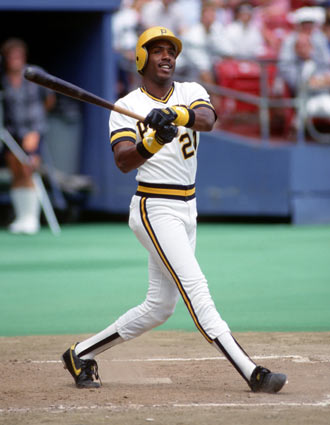
1972 Pirates: As noted in another post, I pushed the allowable time range for this team, which had the best record of any Pirates team back to 1925 and the best Pythagorean record of any Pirates team going back to 1901. Since they only missed the cutoff by a year, that seemed fair enough. However, this team, though the reigning World Series winners, couldn't beat the Reds in the NLCS.


1976 Phillies: The start of a pretty successful run for Philadelphia, which eventually resulted in a World Series winner in 1980. This edition of the Phillies won 101 games, and had the best Pythagorean record in franchise history going back to 1883. The big stars were Mike Schmidt and Steve Carlton, and Tug McGraw makes an appearance.


1986 Mets: I was a high-schooler when this team made its appearance, and growing up outside NYC (even as a Yankees fan) there was no getting away from them. The 1969 team may have more sentimental value, but this is clearly the best team in franchise history, led by Gooden, Strawberry, and Carter.


1994 Expos: One of the great what-if teams, they were on their way to cruising to a division title and possibly more when the strike hit and wiped out the rest of the season. They had two hall of famers, but the team was dismantled after the strike and the team moved within 10 years.


NL Central


1975 Reds: The Big Red Machine is generally considered one of the dominant dynasties in baseball history, and this was their best year. Their pitching staff wasn't famous, but their batters included Hall-of-Famers Bench, Morgan, and Perez, and some argue Pete Rose should also be in the Hall of Fame.  I expect this team to do well.


2007 Rockies:  This team had an absolutely bananas stretch run, winning 14 of their last 15 games to clinch a tie for the Wild Card, then went on a winning streak that took them to the World Series (where they got swept by the Red Sox). The Wild Card game was a legit classic, even if it ended on a dubious call.  I honestly expect this team to do very poorly in this league, but it's just a gut feeling.


2013 Cardinals: The Cards have been in an extended period of success, with only a few years out of contention this century. The 2013 team has the best Pythagorean record by a little bit, and that's what I used to choose, but I could have gone with the 2004 or 1985 teams and not degraded team quality much if at all. The franchise seems to have a pattern of winning the World Series with mediocre teams (2006, 2011) and losing (usually to the Red Sox) when they have especially good teams (2013, 2004, 1985). Perhaps that's karma for 1946 and 1967. In any case, Pujols had moved on by this time, so it's a Beltran/Holliday team. 


2016 Cubs: Not only was this team famous for breaking the long World Series drought for the Cubs (as maybe you'd heard), but they also are certainly the best Cubs team since the 1930s and possibly since the previous time they'd won the World Series. It seems silly to mention the main players since this was so recent, but for completeness the team was led by Bryant, Rizzo, and Lester. 

Saturday, March 28, 2020

Cloverland Leagues: AL Southeast and AL West


On we go, counting down to Opening Day and moving (probably too slowly) though the divisions. So, I'll start doubling up...


AL Southeast Division:  I claimed in the last post the I thought the AL Central was a funny grouping, but really these are all funny groupings.


1973 Baltimore Orioles:  The very best Orioles teams were pre-DH, but this team from the very first year of the DH has many of the same players--Brooks Robinson, Boog Powell, and the pitching staff. This team also has a Pythagorean record just a bit better than the 1979 team, which was the other reasonable choice. The 1997 and 2014 teams, the best of the post-1979 years, don't come particularly close.


2010 Tampa Bay Rays: This division-winning team won 96 games, one less than the 2008 pennant winners, but had a better Pythagorean record. David Price shows up again for this team, and is probably the biggest star (other than maaaaaaaaaybe Evan Longoria?). I honestly don't think this team is going to do very well.


2011 Texas Rangers: The best team in franchise history both by real number of wins and by Pythagorean record, they had a heartbreaking finish in the World Series that year. Nelson Cruz seems to have shrugged it off, though.


2018 Houston Astros: Sandwiched between two pennant winners, it's this team that had the best Pythagorean record, which "should" have given them 109 wins on the year instead of "just" 103. One of the reasons this is a funny grouping is because I can kind of imagine how Tampa, Texas, and Houston might all do against each other--all are recent. I think Houston is clearly the best of those teams. But throw in Baltimore, and I have no idea. I think Baltimore is better, but I have no idea if it's because I've heard about those great Baltimore teams my entire sentient life and it's tough to believe that a team from two years ago can really compete?  I guess we'll see. And of course, there are no trash cans to help the Astros hitters here...


AL West Division:  So, this is an interesting division in that unlike the other AL divisions, all of these teams are spread in time from one another. That exacerbates the issue I just mentioned in that I have no idea how these teams will stack up against each other, though two of them are alums of the solo computer APBA leagues I ran in the past.


1977 Kansas City Royals:  The Royals, for instance. This franchise has been around for 50+ years, and has had their share of competitive teams--a mid-70s to mid-80s stretch that was consistent, and then a handful of mid-2010s teams. They won two World Series in that time, and appeared in two others. This team missed out on the World Series after the Yankees knocked them out of the playoffs, but was a great team--the greatest Royals team. How do they stack up against the greatest of other franchises?  I expect them to lose consistently.


1988 Oakland A's: Oakland has had several stretches of excellent play, with their best team (while in Oakland) coming just before the DH era. Their best team since 1973 is nearly as good, from the late '80s-early '90s dynasty. On paper, this looks like a dominant team.  In the APBA league, they regularly had trouble scoring runs and ended up a doormat. We'll see how this goes.


2001 Seattle Mariners: There is no other credible choice for best Mariners team of all time. The all-time record holder for most wins in a season for an AL team, plus the league as a whole would miss out if it had no Ichiro. I managed this team for APBA one year, which was a somewhat frustrating experience. I got them into 2nd place, but the 1995 Cleveland team was just too strong and we couldn't catch them. Again, I don't know how this will go. It could go well.


2014 Los Angeles Angels: I have no sense of what this team is about. I don't remember them as they were happening.  I also realize, as I'm writing this, that the 2002 World Series-winning team had a better Pythagorean (and real) record than this team, by a bit. Sorry about that, Angels fans. At least this way we get Mike Trout involved?


Thursday, March 26, 2020

Cloverland Leagues: AL Central


On we go to the AL Central. It's a bit of a funny grouping.


1982 Milwaukee Brewers: Harvey's Wallbangers! They won 95 games in real life, close to their Pythagorean projection of 96. The 1978-1983 period was really the only period of sustained success in franchise history. A couple of more recent teams (2011 and 2018) won 96 games, but had worse predicted records. Besides, when push comes to shove, how do you not go with these guys?


1984 Detroit Tigers: I wasn't quite old enough to be a baseball fan when the Big Red Machine was active, so this was the first team I remember that was touted as one of the all-time greats. And here it is. They outplayed their Pythagorean record by a few games, but are still pretty handily the best Tigers team of the past 50 years (but not the past 52). 


1994 Chicago White Sox: A strike victim, they were on a 96-win pace (with a 98-win Pythagorean projection) but of course got nothing. Frank Thomas had a monster year. I kind of feel like they're going to get killed in this league, but maybe not as badly as I feel like the Brewers will..


2019 Minnesota Twins: A 101-win team, and easily the best Pythagorean record of any Twins team since 1969, but damned if I could tell you anything about them (even though they're the most recent team in the league). The Yankees beat them in the playoffs, because of course the Yankees beat them in the playoffs. I suppose I'll learn more about them as the season goes on!


Wednesday, March 25, 2020

Cloverland Leagues: AL Northeast Division


So, I'm going to keep the Cloverland Leagues moniker, at least for now. As noted, I'm going to go through the teams and say a bit about each of them, starting with the AL's Northeast Division:


1998 New York Yankees:  Won 114 games during the regular season, which was an American League record to that point (the current record holder is in the AL West in this game), and went on to win the World Series. As a Yankees fan I'm rooting for them and will be managing them. At the time it was claimed that even though they were among the all-time greats they didn't have any Hall of Famers, but of course Jeter and Rivera proved that wrong.


2015 Toronto Blue Jays: Winners of only 93 games during the regular season, they scored and prevented runs at a clip that "should" have won them 101 games (i.e. their "Pythagorean record"). That's the best in Blue Jays history, and that's the metric we're using, so here they are. They also were involved in perhaps the single craziest inning I have ever seen in my 40+ years of baseball fandom. Josh Donaldson, Edwin Encarnacion, and Jose Bautista lead the hitters, and David Price makes his first appearance among the pitchers.  We'll see if they can keep out of 4th in this division.


2017 Cleveland Blues: I noted the name change in the last post. This team won 102 games in the regular season, but had an even better Pythagorean record (predicting 107.5 wins). This is another Edwin Encarnacion team--even given the sort-of compressed timeframe of this league I'm surprised at how many people show up on multiple "best-of" teams. Perhaps I'm used to the long tenures of the best recent Yankees? Or not acclimated to the late summer shuffle of good players from contending teams to non-contending ones?


2018 Boston Red Sox: Another recent team. This one is considered by a lot of folks to be not only the best Red Sox team of the last ~50 years, but the best of all time. In the old APBA game I used the 1912 Red Sox, it would be interesting to play them against one another (though perhaps hard to have a single group of game settings that could fairly apply to them both).  David Price makes his main appearance here, though I think he shows up on yet one other team. Mookie Betts was the superstar, of course...

Next up, we'll go to the AL Central.

Sunday, March 22, 2020

Social Distancing and New (Baseball) Beginnings


Well!  It's been quite some time since I've updated this blog, and what a decade the teens were, eh? Whoo. I never got terribly far with the last league--I didn't have time to really learn a new game and make it do what I wanted, so I used a quickstart that was available rather than trying to replicate the kind of leagues that I wrote about earlier in this blog's history.  Eventually that petered out, though I don't remember whether it was work and travel ramping up or if other things just took up my free time.

With the COVID-19 pandemic currently underway and affecting sports around the world, including the start (and perhaps the entirety) of the Major League Baseball season, I thought I'd give this another go. Technology has advanced, and while my free time is structured very differently than it was when I was last successful at running a league like this, I'm game to give it a go.

I'm using Out of the Park Baseball, the newly-released version 21. Rather than try to continue with what I was doing before, I'm basically rebooting. I'm using the best edition of each current team in the DH era, as determined by Pythagorean record (rather than real record). This is mostly for ease and so I don't have to deal with what's "fair" when the 1927 Yankees play the 1995 Indians (for instance). It turns out both the Astros and the Brewers have had their best seasons while in the AL, so the AL has 16 teams and the NL would have 14. To bring the NL up to a more aesthetic (to me) 16 teams, I've added the 1994 Expos (the Expos' move is the only relocation of the era) and a more fantastical choice, pretending that the Marlins moved to Charlotte in ~2006 or so and adding a "Charlotte Knights" team that's really the 2008 Marlins in different uniforms. They won't be competitive for the title or anything, so it shouldn't throw things off very much (I'm using a balanced schedule). It also seems like it'll be an interesting (perhaps only to me) experiment of how a not-great-but-decent team does when facing all-timers every day.

I did two other things of some (though perhaps little) note: I broke the DH-era rule for the Pirates and included the 1972 team. They're a bit better than any other Pirates team in the DH era, it's only off by a year, and that way Roberto Clemente can be included. Finally (I think), I rebranded the Cleveland team to be the Blues, one of the original names for the AL franchise. I figured since I objected to their current name (a feeling which has evolved over the decade this blog has been on hiatus) and I could do something about it, I would.

The next few posts will talk about the teams in each league. I certainly plan to have the time until that post be much less than the time taken from the previous test to this one. 

Tuesday, November 30, 2010

Game On?

I decided, after some deliberation, to move into the 21st century in terms of the baseball gaming.  Seriously.  I've been playing APBA Baseball for Windows, which has been fun but was a Windows 95 game.  I've dragged it around from our old Windows 95 machine to my rootin'-tootin' dual-bootin' Dell running Windows 2000, to Virtual PC running on my ol' PowerMac.  That was where the problems started, and it's only gotten worse since getting my MacBook Pro.  I'm not interested in installing Parallels or Boot Camp or whatever it is-- I managed to avoid a whole bunch of tsuris at work because I didn't have even a virtual Microsoft machine on here when they got hit with a major cyberattack.  So to play the game I'd have to either play on the old machine (which was already problematic) or, the lazy option I usually would pick, would use a VNC connection to the old machine and play it that way.  But I...well, I don't digress but I'm clearly going on too long.  The game isn't abandonware, but neither has an upgrade or new version been made since 1997, despite sporadic hope. 

So I've decided to try Out of The Park Baseball (OOTP).  I've been messing around for a few weeks, playing an All-Time All-Star League that was available on the web.  So far so good, I'll post about that soon.  I'm not exactly sure that I'll have a 1:1 correspondence with the games/simulations I was doing with the old game, but so it goes...

Sunday, January 24, 2010

Northeast Corridor

Recent and upcoming action centers on the Acela route. I mentioned Baltimore in the last post. The Boston Red Sox play-in is finished, and the 1948, 1949, 1995, and 2003 teams join the 12 Red Sox pennant winners in the qualification league, which I'll start... well, I'm not sure. Sometime soon? I'm still debating which team to manage, I'm leaning toward one of the Babe Ruth-era teams.

Over in the NL, I'm also setting up the Mets QL. Once again, should start soon. I'm less certain which team to manage here-- maybe 1969? Or maybe 1999. Finally, the Phillies QL is underway. At a bit over the 1/3 mark (I'm playing them to 180 games), the 1980 Phils are holding a 3.5 game lead over the 1978 team, with 1901 and 1976 another couple of games further back. I'm not sure who I was expecting, exactly. The teams with the best winning percentage in modern Phillies history are 1976 and 1977, the latter team is in 15th place (out of 16). The current dynasty of 2007-2009 are in 12th, 13th, and 14th. In case you're curious, Gene Mauch won't have to worry about a late choke in this league-- the 1964 Phils are deep in last place.

Sunday, January 17, 2010

Back in yon saddle (or '69, dude!)

Multiple crashes later...

We're back! We have a new router, which should work better. Home network has been messed with and is working better (knock knock knock). So I restarted up some of the leagues that have been so rudely interrupted:

For the Boston Braves, the previous state of affairs left the 1897 team well in front after 100 games. I ran through a replacement league and ended up with the 1897, 1898, and in a suprise, the 1948 teams all within a game of each other atop the league. So I ran it again. This time, as the first time, the 1897 Beaneaters held a healthy league at the end of things. So we welcome back the 1897 Beaneaters. As is the case in the Cloverland Leagues, the Beaneaters scored a ton of runs (6.5/game), but they had a league-average pitching staff this time, no mean feat when competing with dead-ball era squads like the Miracle Braves of 1914.

I also restarted the Red Sox Play-in League. At this point, I'm thinking I'll take four teams to add to the 12 teams with byes (the 12 pennant winners for the Red Sox). About halfway through, those four teams look to be 1949, 2003, 1995, and 1948.

Finally, after wrestling with the Orioles for so long, and all the crashes, I decided to just going to let the computer managers play it out. So congratulations to the 1969 Orioles, winners of 109 games (though they might have traded some of those for an extra three wins against the Mets). Here, they handily defeated their next closest rivals (from 1971 and 1970). In fact, the top four teams were all from Baltimore's early 70s dynasty, as 1973 finished fourth.

The '69ers were second in the league in runs scored (half a run per game above average), and first in ERA (0.7 of a run better than average). Jim Palmer '71 had 27 wins, and Mike Cuellar '69 led in strikeouts. On the hitting side, Eddie Murray '83 led in batting, Boog Powell '69 and Frank Robinson '66 tied for the lead with 44 home runs, with Boog's 1964 version just behind with 43.

Next up? Continuing the Red Sox play-in, and I think I'll try the Phillies. I'm pretty clearly not going to get Season 4 started before the real season begins, but that's OK. It is, after all, supposed to be fun, not work. :)

Sunday, November 22, 2009

On the Backstretch

Well, maybe that's not quite accurate. But a bit more than 90 games are done in the Orioles League, with about 60 to go. The current standings:

Team W L GB
1979 52 34 -
1969 53 38 3.5
1971 49 39 6
1997 49 40 6.5

with the other teams trailing further, all the way to the 1980 club, 21 games back. My 1966'ers have been very hot and cold, following up a 7 game win streak by losing 9 of 10 (and counting!)...
Various Boog Powells and Frank Robinsons are leading the league in the important categories. The big shock (for me) is the 1970 team languishing below .500 and probably out of the running.

As far as the Red Sox Play-in League, the top four teams will make it to the next stage. At this point, those four teams look to be the 2003, 1999, 1949, and 1972 clubs. 1977 and 1995 aren't far behind, though. 1972 was not a particularly distinguished year for the Sox (2nd place, a half-game back in a strike-shortened year in circumstances that, frankly, I don't understand), and I might expect them to drop out of the running.

Saturday, November 07, 2009

Red Sox Play-In, and Orioles Update

First! Started the Red Sox Play-In league. I've already forgotten whether I was going to take 2 or 4 teams, but that's an issue for a later date. The teams, as noted elsewhere, include the near-misses of the pre-Wild Card era (1948, 1949, 1972, 1977, 1978), most of the teams that made the playoffs but not the pennant (1988, 1990, 1995, 1999, 2003, 2005, 2008, 2009), and the only other team that finished over .600 and in 2nd place (1942). 10% of the way through, and the 1999 and 1949 teams are tied at the top.

Second! The Orioles League crept forward. The 1979'ers have a 1 game lead over the 1971 team, with 1997 and 1969 a half-game further back. The season's roughly half over.

Third! Rethinking the Rockies. The 2009 team was a good one, almost certainly at the same level as the 2007 team currently slated for inclusion. So, I'm thinking I'll run them against each other.

Friday, November 06, 2009

Where were we?

Let's see. Now that I'm probably done recording music for a little while, and crazy summer travel has slackened, and the Yankees have finished off the real season in style :) , it may be time to reconnect with stuff here. Having lost the Orioles season to the crash was something of a bummer, though, and has clearly sapped my enthusiasm for actually playing that season and managing a team. I'm now leaning toward just letting the computer finish it and moving on. In theory, I was also thinking of playing a Red Sox season and managing a team. We'll see how that goes.

Wednesday, July 29, 2009

Crash and crash

Lost the Orioles season to a crash. Restarted it and ran it on auto to get to the point where it was before. Again, another crash. Worst of all, it was my own stupidity that led to the crashes. :P

I'm going to try and pick this up again. Oddly (or perhaps as one might expect?) the third time through has tracked the original pretty well: 1969 a bit ahead of 1979, 1966 near .500. The details don't match, though. (The second time through 1969 was running away with it.)

So the question is whether to pick up and start managing where it left off (probably) or just let the computer managers finished what they started and move on (probably not). Unfortunately, I've been so swamped with things, I haven't had much time to play anyhow...

Monday, June 08, 2009

Baltimore, Boston, and Boston

Lumbering along. The Orioles league is approaching the halfway mark, with the 1969 team still holding a narrow lead over the 1979ers. Three other teams are lurking a bit further back. My 1966 squad has been playing much better, and slowly has entrenched themselves above .500.

Meanwhile, the Boston Braves Qualification League is underway. This is almost certainly a battle to be won by one of the 19th century teams; the franchise had a dynasty just before the 20th century dawned, and was almost completely inept from 1900 on. The 1897 Beaneaters, winners of the 2nd Cloverland Series, are in the lead with 1893 in second place.

After the Braves finish, I'm considering a Red Sox league. There are a great many teams worthy of consideration as best of the bunch, so I'm setting aside a bye for the 12 pennant winners they've had (from 1903-2007). The league I'm considering playing with next would be a play-in league, to select another 2 (4?) teams to join those 12. The play-in league would draw from the near-great Red Sox teams, from those that lost in a one-game playoff (1948, 1978) or just missed the playoffs (1949, 1977, 1972) to those that made the playoffs and lost in an opening round (1995, 1999, 2003, 1990...). If not these guys, I may choose to play a White Sox or Indians league.

Sunday, May 10, 2009

Twin Cities Closure

The real season has begun, and progress in the virtual leagues has been slow.  However! I have finished the Twins Qualification League and am happy to present the champions: The 2006 Minnesota Twins.  American League Central champions and winners of 96 games in real life, the 2006 team held off a late charge by the 1969 Twinkies to take the title by 3.5 games.  They were powered, as you might expect, by Johann Santana (22-5, 1.94 ERA, 250+ Ks), Joe Mauer (.385 to lead the league plus 121 RBI) and Justin Morneau (.330, 35 HR).  Harmon Killebrew had a monster year for both the 1967 and 1969 teams, but it wasn't enough.

Meanwhile, a couple of weeks of game time have passed in the Orioles League. My 1966ers have scuffled a bit and still sit a bit below .500.  The 1969 Os are 1.5 games ahead of the 1979 edition, with 1970 in 3rd.

Friday, February 06, 2009

Spirit of '69

Another two weeks of game time have passed in Baltimore, and we're past the quarter pole. The 1969 Orioles have ripped off 9 wins in a row to roar into first place, leading the 1979 team by 1.5 and 1970 by 3. My team, the 1966 Orioles, have been more or less treading water and sit at 20-22 (8 games behind).

Milt Pappas (who could forget Milt Pappas for Frank Robinson?) from the '64 edition is at a sparkling 8-2, with a surprising 1.17 ERA. My boys from '66 are making a good show of the hitting leader boards, however, with folk hero Russ Snyder batting .375 and Frank Robinson (see, you how could you forget?) leading the league with 15 home runs and 41 RBI.

Up in the Twin Cities, we're over halfway home. And here, too, the 1969ers are putting on a run. However, they have not (yet?) pulled ahead, finding themselves 1 game behind the 2004 team (with 2006 another 1.5 games back). Joe Mauer of the 2006 Twins paces the league with a very impressive .392 average, also leading in RBI. Meanwhile, Harmon Killebrew is tied with himself for the home run lead, and is also sitting a little bit further behind in third. Rafael Santana (2006) is at 14-2 with an ERA just under 2.00.

Looking ahead somewhat, the Boston Beaneaters/Braves or the San Francisco Giants will probably be the next team up after the Twinkies finish.

Saturday, January 17, 2009

Twins and Orioles update


The Twins League is roughly one-quarter done.  The 2003 team leads a bunched field, riding a 5-game winning streak with the 2004 team percentage points back and 2006 1.5 games behind. Based on the team stats, the 2006ers are looking pretty strong despite their current residence in 3rd.  Rod Carew (1967) leads the league in batting at .395, Killebrew (1967) in home runs, Brad Radke (2004) is at 6-0.

Meanwhile, up in Charm City, the 1979 Orioles are a game up on the 1970 team after 30 games, with the 1969 and 1997 teams in the next rank a few games back.  Surprisingly, the pitching for the 1970ers is underperforming, otherwise they'd be running away with things.  Mike Mussina (1997) is 6-0 with an ERA of 1.39, with Robby Alomar (1997) hitting .355.  Three players are tied for the lead in home runs.  My 1966 team is languishing in 9th (of 14), 5.5 back.  Of course, who knows how they'd be doing if not for my managing....

Saturday, December 27, 2008

Minnesota New Day Rising

The Twins League is underway (though perhaps with a Prince soundtrack rather than the Posies song quoted in the title).  Ten teams, basically in three time periods: the Killebrew era when the Twins had very good teams that couldn't quite beat better teams (like the Koufax Dodgers or the '69-'70 Orioles); the Puckett era when the Twins had decent teams with unbeatable home field advantage and regularly defeated better teams (Whitey Herzog nods sadly); the Johan Santana teams of recent vintage who mostly couldn't quite get out of the first round of the playoffs.

The 1970 team are the current representatives in the Cloverland Leagues.   About 20 games in out of 162, it's too close to call and far, far too early.  I guess I'd bet on 1965 as the best of these teams, but that doesn't always translate into success.  Still, if I have to guess a winner...

Meanwhile, the 1970 Orioles still are the leaders after roughly 25 games, but the 1979 edition has been on a tear and have closed to a half-game back.  Again way too early for real prognostication, but it may end up closer than I'd expected...

Monday, December 22, 2008

And from the Polo Grounds...

After a pretty close race, the 1911 New York Giants fought off the 1912, 1913, 1904, and 1905 editions of the 'Jints to win their qualification league and represent the New York Giants franchise.

The final standings at the top:

W L Pct. GB
1911 89 60 .597 -
1913 88 64 .579 2.5
1904 87 65 .572 3.5
1912 87 65 .572 3.5

Despite winning the World Series in a 4-game sweep, the 1954 Giants finished in 20th (that'd be last), 28.5 games back.

The hitting categories were mostly led by teams from the 1920s and 1930s, as one might expect, save for Jack Doyle of the 1894 squad sitting atop the batting average and obp categories and  just missing a .400 season (.399).  Mel Ott (1934) led in slugging and runs created, Rogers Hornsby (1927) in runs scored, George Kelly (1922) in RBI, and Bobby Thomson (1951) hit 33 shots heard 'round Kings Contrivance to edge out Ott (1936) and lead in home runs.

Pitching statistics were biased by the 1894 team, who had two pitchers starting 70%+ of their games in real life.  Those two pitchers (Amos Rusie and Jouett Meekin) both topped 30 wins.  Hall of Famer Christy Mathewson took up 4 slots in the top 10 winners and top 10 ERA, with the 1905 edition performing best: 29-10 (3rd in wins, 2nd in win pct., 1st in ERA, 4th in strikeouts).  

The 1911 team didn't have many statistical leaders, but managed to grind out the pennant by being among the team leaders in batting and pitching.  In reality they lost the World Series to the Philadelphia Athletics.  

The Orioles league has stalled out a bit (naturally, since I'm actually trying to manage one of the teams instead of letting the computer do all the work).  Not sure if the next all-computer league will be Oakland or Minnesota...

Tuesday, December 02, 2008

Giants after 90, Orioles after 20

The decision of who will right to represent the New York Giants is currently looking like it'll go down to the end. A bit over 90 games are finished, with roughly 60 to go. Five of the 20 teams are within a half-game of the top:

Team W L Pct. GB
1913 52 38 .578 -
1904 53 39 .576 -
1922 53 39 .576 -
1905 52 39 .571 0.5
1912 52 39 .571 0.5

Meanwhile, in Charm City things are a bit more separated, though it's still early:
Team W L Pct. GB
1970 15 5 .750 -
1969 12 6 .667 2.0
1960 12 7 .632 2.5
1997 10 7 .588 3.5

It seems unlikely the 1970 team will be able to keep up that pace, but there's nothing weird about them being atop the standings...

Sunday, November 23, 2008

Giant Steps

About 40% of the way through for the New York Giants league. The dead ball era teams continue their dominance, with the 1904 club leading the pack followed by the 1911, 1905, and 1912 teams all within 2 games.

Jack Doyle of the 1894 team is pacing the league with a remarkable (and way over his head) .457 average. Bill Terry's excellent .407 is second but obviously overshadowed. Bobby Thomson and Mel Ott are leading in home runs.

Christy Mathewson of various vintages is filling the pitching leaderboards, with the 1905 version at 12-1 and the 1913 version leading in ERA with 1.37.

Saturday, September 13, 2008

O's and Jints Update

Just a short one for now. The Orioles League has gotten through about two weeks of play, and the 1970 team is in the lead at a blistering 10-1. My 1966ers were barely a speed bump in their way, though they did force late inning heroics by Paul Blair of 1970 at least once. There's a bit of a bunch up behind the leaders and needless to say it's early yet.

I've gotten a bit further for the New York Giants QL. There the 1904 and 1905 teams lead the pack. Again, it's early yet. But I'll note that the current Cloverland League representatives are the 1970 Orioles and the 1905 Giants. It's rare for teams to be able to defend their places, with only the 1906 Cubs, 1927 Yankees, and 1976 Reds having done so so far (and I punted the Yanks for the 1939 edition in part just to do something different and since they'd finished "close enough"...).

Saturday, August 30, 2008

Dog Days

Alas, the playoff hopes of my real-life favorites are quickly dimming. I also have been too swamped to get too much done in the APBA leagues. I've started the Orioles QL, managing the 1966 edition. I'll post an update on that league once I've gotten through 10 games (right now it's at 7). I haven't started up the NY Giants at all.

But I figured I'd mark the Rays' clinching of a winning season by officially bumping the 1937 Santo Dominigo Dragones in their favor. With 83 wins and 28 games to play, it seems likely they'll reach 90 wins with no trouble and a .500 record would net them 97. While having the Dragones meant including Satchel Paige, Josh Gibson and other greats in the Cloverland Leagues fun, my general philosophy for the simulation means I should include the team that I have a hope of including at their real relative strength instead of the one with kludged stats. The only real kind of debate would be whether holding off on Tampa Bay until Season 5 might allow a better TB team to be represented, but I can always have a runoff or something if it ends up being useful. But for now, congratulations to Scott Kazmir, Evan Longoria, Carlos Peña and the rest.

The Brewers present another problem. If the 2008 team is worthy, they could either be stuck in the AL as a non-DH team (since the majority of their seasons were as an AL franchise) or included in the NL (since they would have had this season as an NL team) with the AL version removed, or (gulp) treated as separate teams and included twice (though I don't like that option at all). If treated as an NL team, that would bump the 1896 Orioles and open space in the AL for... well, I guess the Dragones again.

Tuesday, August 05, 2008

National Heroes

The Washington Nationals Qual League (that'd be the version of the team that moved to Minnesota in 1961) has finished. The 1924 and 1930 teams battled most of the season, with the World Champs opening up a slender lead in the closing weeks...

And then losing it at the very end. As with the Pirates, there were 3-4 rainout makeups to close the season, and it was over the course of those games that the 1930 edition overtook the 1924 team.

The 1930 Nationals finished 2nd in real life to the equally-defunct Philadelphia Athletics, also represented in the Cloverland Leagues. They join a surprising number of 2nd-place teams in a league that ostensibly has the best of each franchise. However, they had the 3rd-most wins in Washington history and the best Pythagorean record of any Washington team, so this result doesn't strain credulity. They were led by Hall of Famer Sam Rice and also had Hall of Famers Joe Cronin and Heinie Manush, trading away HoFer Goose Goslin early in the season. Fittingly for a team managed by Walter Johnson, however, their team strength was pitching. Ironically, in the Qualification League, the 1930 team won via their bats.

Next up: The New York Giants and actually starting the Baltimore Orioles QL.

Sunday, July 13, 2008

A Surprise in Steel City

It came down to the last day, but the 1960 Pittsburgh Pirates will be moving on to Season 4. They finished hot, winning 2/3 of their last 50 games while the 1901 edition played merely OK (.550 over their last 50 games, only about .500 in their last 35). The end of the season saw a slew of rainout make-ups, and the 1960 team finished early, one behind in the loss column but one ahead in wins. Needing to win one game to clinch a tie, the 1901 team instead dropped both of their last make-ups...

So for the first time since I began, Pittsburgh will be represented by a group other than Honus Wagner, Fred Clarke, and their dynasty of the aughts. Given their status as reigning NL East champions, this is also something of a shock. Instead it'll be Roberto Clemente, Vern Law (20-5 in the QL), and Bill Mazeroski.

The Washington Nationals (AL) Qualification League has begun play, with 8 teams from 1912 to 1945. I might put my money on the 1933 team, though the current representatives from 1925 are also a relatively safe bet. Meanwhile, given the play of Tampa Bay and Milwaukee in real life, the odds of an alteration to current expansion plans is certainly a going concern...

Friday, July 11, 2008

50 More Games Gone...

The top of the Pirates League remains the same, though there's been some mixing below that upper crust. The 1901 team still leads, winning at a .646 clip. Bonds and the 1991 Pirates have dropped off the pace from 2nd to 3rd, while the 1960 Pirates are hanging in there, merely 4 games back. Meanwhile, the 1970 team has dropped 2/3 of their games since the last update and now sits in last place, with the 1975 and 1972 teams joining them in freefall. Meanwhile, the 1893 edition has picked up the pace as their best pitchers have been taking the mound more often.

Fred Clarke of 1903 continues to blister the ball, batting .380, but has fallen to 3rd in batting behind 1901's Ginger Beaumont and 1927's Paul Waner, who's up at .407. We'll see if he keeps it up all season. Willie Stargell from 1971 now has the HR lead by himself (25), with two other Stargells, Robertson, and Dr. Strangeglove Dick Stuart rounding out the top 5. Fred Killen of 1893 has 17 wins and leads the league in strikeouts, while Jesse Tannehill from 1902 leads in ERA (1.91).

I'd have to think the 1901 squad would continue their pace and make it to Season 4. The 1960 Pirates were good, but not _that_ good. On the other hand, they only need to get lucky...

Friday, June 27, 2008

50 Games Gone in the Steel City

Eighteen teams are vying to represent the Pirates franchise during Season 4. I've gotten through 50 games (out of 136, IIRC). To update all my loyal followers, here's what the top of the standings looks like:

Team W L Pct. GB
1901 35 14 .714 -
1991 32 18 .640 3.5
1960 30 19 .612 5
1909 29 21 .580 6.5
1902 28 22 .560 7.5
1972 26 24 .520 9.5
1975 26 24 .520 9.5
1970 25 25 .500 10.5

I was expecting the 1902 team to be the winners, there's still plenty of time left. The 1991 team is certainly hanging in there, though...

In terms of individual leaders, Fred Clarke of 1903 is leading with a .392 average, Bob Robertson from 1970 and Willie Stargell from 1971 both have 12 home runs, and Jake Beckley form 1893 has 56 RBI. On the pitching side, Vern Law and Bob Friend of the 1960 team and Deacon Phillipe from 1901 all have 8 wins. Ed Brandt from 1938 has an ERA of 1.13 (though he's unlikely to get enough innings over the whole season to qualify), and 1902's Jack Chesbro leads with 60 strikeouts.

Sunday, June 15, 2008

Royals Treatment and Incoming Pirates

Congratulations to the 1977 Kansas City Royals, which will (eventually) represent the franchise in Season 4 of the Cloverland Leagues. They ended up crushing their rivals in a four-team league, going 100-56 and 24.5 games ahead of the second-place 1978 edition.

Next up: A truly massive 18-team Pittsburgh Pirates QL. The participants range from an 1893 team that featured Connie Mack as a player, through the Honus Wagner years, Roberto Clemente, and Willie Stargell years all the way down to teams with a young Barry Bonds. My guess is that the 1902 team, current NL East champions, will take it and return for Season 4.

I also may start trying to get the Baltimore Orioles QL underway. I plan to manage one of those teams, though, and I'm having a hard time picking...

Sunday, June 01, 2008

Photo Finish (and a reshoot)

The Royals Qualification League reached a finish, with the top three teams extremely tightly bunched:

W L Pct. GB
KC 1978 92 70 .568 -
KC 1976 91 71 .562 1
KC 1977 91 71 .562 1

The three teams were also closely matched to one another, within 2 games of .500 over 36 games played. Statistically, they were also very close in ERA and fielding, though the 1977 team scored significantly more runs than their rivals... They also were much better in real life.

So, I figured I'd run it all again, this time with just those three teams and the incumbent 1985 team, which finished fifth (though only a half-game out of fourth). I'm roughly halfway through there, and they're not bunched. So I'm confident there will be a clear-cut Best Royals Team. :)

Sunday, May 18, 2008

KC Update

Things have been poking along slowly around the Pleasure Grounds, but the Royals Qualification League has slowly been moving forward. With about 6 weeks of game time to go, the top of the standings look like:

Team W L Pct. GB
KC 1977 73 55 .570 -
KC 1976 71 54 .568 .5
KC 1978 72 55 .567 .5
KC 1985 70 55 .560 1.5
KC 1984 65 64 .504 8.5

The 1980 team is further back, but it at least seems clear that the mid-late 70s teams were the best in Royals history. Not that this is a surprise.

Saturday, April 05, 2008

Good Morning Baltimore!

I'm going to run most of the qualification leagues with all computer managers, which'll speed things up. But for two of the leagues I'm interested enough to actually manage one team for myself: the Red Sox and the Orioles. Since the local boys aren't going to threaten this year, it seems safe enough to do them first (I'd just as soon hold off on Boston since there's the chance the 2008 team will be the "best-ever" team, though i dearly hope they're not).

I've got 14 teams lined up for the Orioles League, split into two divisions: 6 in the pre-DH division, 8 in the DH division. As with the other QLs, there are basically three types of teams: pennant winners/playoff teams, close misses, and good teams that may or may not have come _that_ close but represent an otherwise absent era. The Orioles were excellent for most of the 70s and early 80s, with a brief late 90s renaissance. In addition, there are 4 teams included from the 1960s-- the 1969 team (famous for losing to the Mets), the 1966 World Series winners, and two near-miss teams, 1960 and 1964. I left out the 1996 wild-card winners since they clearly don't match up and (perhaps more to the point), it'd be a _lot_ more work to include them than other teams since I'd have to enter all their players in by hand.

I haven't totally decided, but I'm leaning toward managing either the 1966 or 1979 teams.

In other QL news, at about the 1/3 mark, the 1985 Royals hold a slim lead over the 1980 team, with 1978 and 1977 close behind. The 1985 Royals are the current Cloverland League representative.

Thursday, April 03, 2008

Season Zero

While I've played a few seasons now with Baseball for Windows (ironically using Virtual PC on my Apple), the very first season was with a Strat-O-Matic card set. I've been thinking of it as Season Zero.

I started it not long after the 1981 baseball strike, when I bought my Strat-O-Matic set. The setup seemed reasonable to me, 11-year-old that I was when I started: use the original 16 teams and play out a season. Unfortunately, given the limitations of the available card sets (and my losing track), I ended up with the Milwaukee Braves instead of the Boston Braves. I also had to settle for the 1940 Reds and the 1950 Phillies instead of the Big Red Machine or the 1980 Philadelphia World Series winners...

I set up an 84-game schedule, and I kept stats by hand. It took years, but luckily I didn't have much of a life (I was, after all, 11-14). I also didn't necessarily follow all the rules: I was too lazy to reshuffle the 40-card deck after every draw, which I'd do for a truly random number. So that got a bit biased. I also didn't necessarily use the "right" lineups, and I'd often turn a good part-time hitter into a full-timer (Fred McNeely, '24 Nationals-- I'm looking at you). But eventually I got through it all.

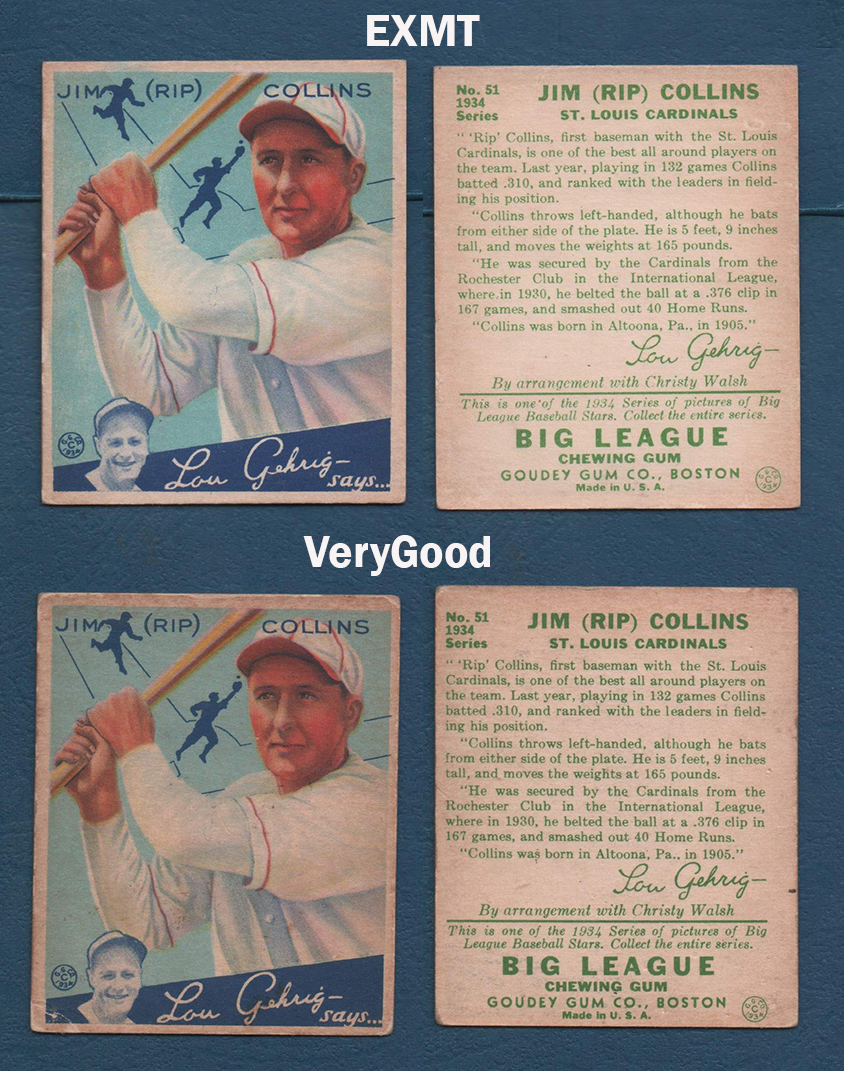
The '27 Yankees ran away with the American League, leaving the '31 A's in the dust. The '53 Brooklyn Dodgers tussled with those underdog Reds and Phils all season, finally pulling it out by one game over Cincinnati and two over Philadelphia. The Yanks defeated Brooklyn in six games. Lou Gehrig was the MVP for the AL. I don't remember the NL winner, Rip Collins of the '34 Cardinals, perhaps?

These teams and this setup provided the basis for Season 1, though with the software I was able to substitute in a Boston Braves team and also get the Big Red Machine and... well, whatever you'd call the 1980 Phillies.

Wednesday, March 26, 2008

Milwaukee's Best

During the no doubt too-long interim between Season 3 and Season 4, everything does not cease. No, indeed! I've been starting to run qualification leagues (for lack of a better term) to try and objectively (sort of) determine which teams get to represent the franchises. The expansion teams have already been figured out, as seen in an earlier post. The first of the currently-in franchises to go through a QL are the Milwaukee Braves.

The Braves were a good team through most of their sojourn in Milwaukee, and an excellent team for much of the time. In their 14 or so years between Boston and Atlanta, they won two pennants and one World Series, and tied for first place one more time (losing in a playoff), never finishing under .500. I picked 6 teams for this league, the pennant winners ('57 and '58) and near miss team ('59), and a set of second-place teams ('53, '56, and '60).

And to my surprise, it was the 1953 team that won it. I ran the league twice through 140-game seasons, with them winning once running away and once in a squeaker. In real life they finished a poor second to a juggernaut Brooklyn team, but with 92 wins. Their Pythagorean record was slightly better (93-61), even with the 1957 and 1958 pennant winners.

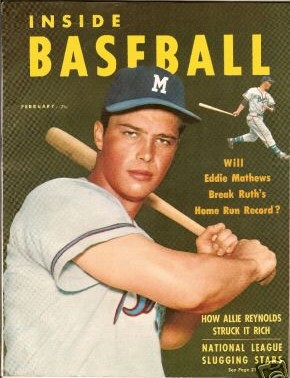
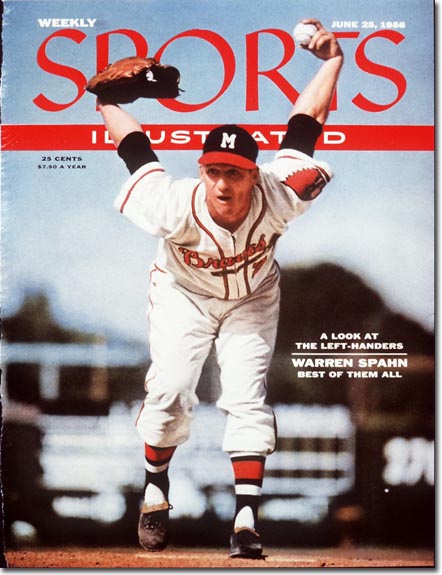
But in some kind of reverse Ewing Theory, the 1953 team is the only one without Hank Aaron. They did have big seasons from Eddie Mathews and Warren Spahn, however.

The Kansas City Royals qualification league is now underway. My breath is somewhat bated.

Thursday, February 07, 2008

MVP Awards

Unlike the Cy Young awards, the MVP awards came out a bit surprisingly, particularly in the AL. I don't know if "real life" voters would have gone this way, but the differences in VORP were too big to ignore...

NL- Dolph Camilli: This was a two-man race much of the year, Camilli vs. Barry Bonds. Dolph led the NL in VORP and was at or near the top in most of the more traditional categories-- 2nd in batting average (.335, Ginger Beaumont led at .339), 2nd in slugging average (.633, Bonds was at .662), leading in on-base percentage (.442) and RBI (127, tied with Hank Aaron). He also hit 37 home runs (4th, Bonds led with 50). By most sabermetric measures Camilli and Bonds were equals, so the tie-breaker was the pennant race where Dolph led Brooklyn to a close 2nd place finish vs. the 6th place finish San Francisco had.

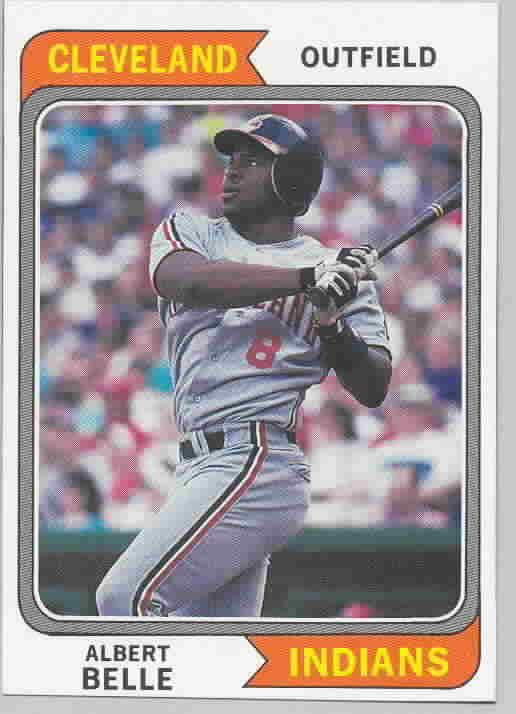
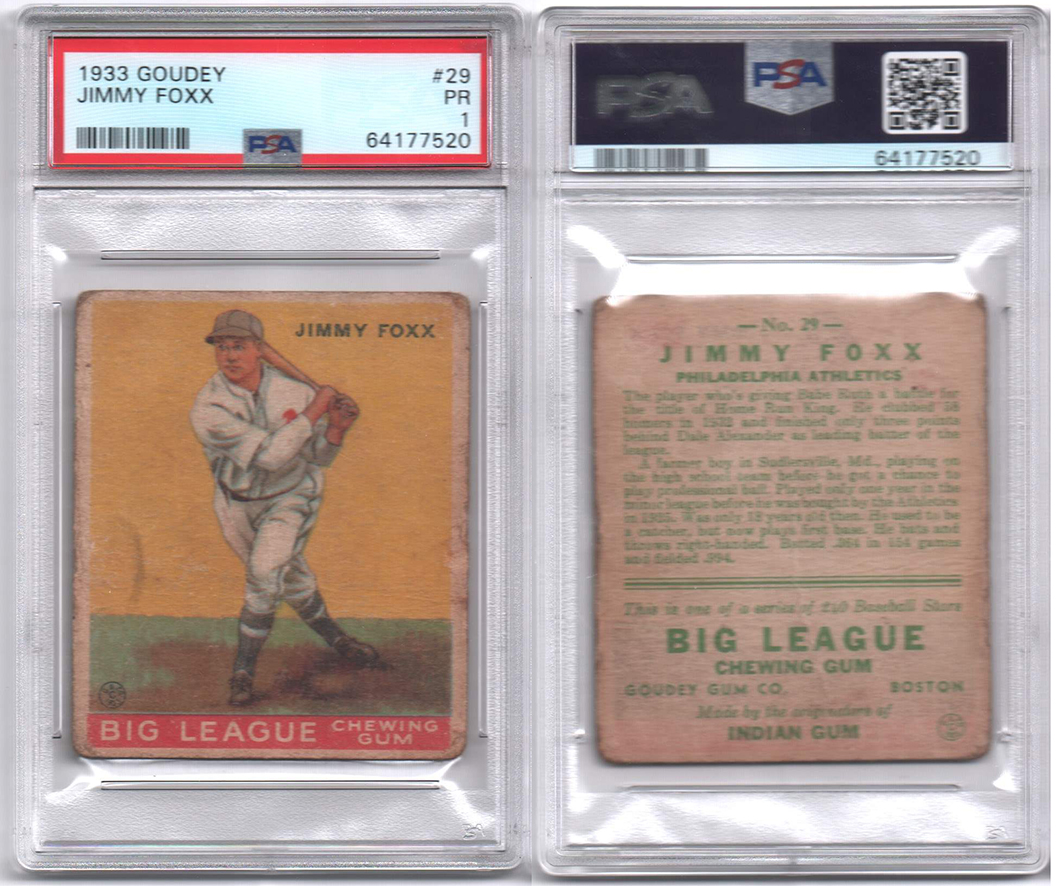
AL- George Sisler: I'm actually as surprised as you are. Of course, you're probably me if you're reading this. :) Albert Belle had a truly monstrous first half, and was a critical part of an Indians team that needed every contribution they got to eke out a division title over the Mariners, an ALCS win over the Yankees, and a 7-game Cloverland Series championship over the Cubs. Plus, he had 62 home runs and 138 RBI! Still, he placed a surprisingly low 5th in VORP. Of those ahead of him, Tris Speaker edged him out in VORP by placing well in many categories. Better yet were a pair of Philadelphia Athletics who put in huge years: Jimmy Foxx was 5th in slugging (.601, Belle led with .698), 4th in OBP (.423), and also in the top 10 in runs, RBI, doubles and triples. Al Simmons was better yet, finishing 2nd in batting (.374) and slugging (.674), leading the league in RBI (149), tied for third in triples (21, Gardner and Goslin led the league with 22) and in the top 10 in runs, OBP, runs, hits, and home runs. Any other year, Simmons would have been the winner.

But this season George Sisler hit .434. Now, I know there's some amount of disbelief that needs to be suspended here. And I know there's no way in the world Sisler hits .434 against the competition he had. Nobody has ever hit .434 for real even facing awful teams. But there it is- he hit .434 and given that and his other statistics (4th in slugging, 1st in OBP, leading in hits, top 10 in runs, RBI, and stolen bases), and that he led in VORP by 20 runs I don't see any rational way to deny he had the best season of anyone. Cleveland fans may argue, but I think the logic is irrefutable. So congratulations to the Browns fans!

Saturday, February 02, 2008

Cy Young Awards

Naturally, statistics are kept in the Cloverland Leagues. And naturally, awards are given. However, I get the only vote. :) I actually went to the trouble of determining VORP for all the players, and rely pretty heavily on that statistic, though I'm willing to use other info as appropriate. The Cy Young awards for the Cloverland Leagues this season have two relatively obvious winners.

AL: Lefty Grove. While the Philadelphia Athletics had a disappointing season (under .500 and tied for last in the AL Classic Division) Grove provided a bright spot, leading the league in wins (22), ERA (2.40), and shutouts (6, tied with the Yankees' Red Ruffing) while coming in second in strikouts and leading Philadelphia in saves. Baltimore's Jim Palmer was quite close, also winning 20 games with a better winning percentage and more quality starts, along with pitching in a pennant race, but Grove's across the board excellence gained him the nod.

NL: Ed Reulbach. Unlike Grove, Reulbach did not lead a lot of categories-- Kid Nichols (among others) had many more starts and unsuprisingly racked up the counting stats (Nichols led the league with 27, Don Sutton led the league in strikeouts). Reulbach did, however, run away with the ERA crown, finishing with 1.41 in 243 innings, nearly 2 runs better than the league average. He also finished second in shutouts (6, Mordecai Brown led the league with 8) and held opponents to a .164 batting average, way below the league average of .243 and by far the best for pitchers over 100 innings let alone over 200 innings. He held opponents to an average of 5 hits per game and allowed an astonishing 0.04 home runs per game, the league leader by a factor of 5. He pitched 6 two-hitters and a 1-hitter, single-handedly accounting for half of the Cubs number of two-hitters or better. Although not taken into account for these purposes, Reulbach continued to excel in the postseason, finishing 5-0 with 5 quality starts in 5 tries and an ERA of 0.63 as the Cubs almost won the Series. There was no particularly strong competition for this award, Brown was second in VORP but was only the second-best pitcher on the Cubs...

Sunday, January 20, 2008

One curse ended/One curse continued: Game 7

Cleveland! Chicago! Game 7!

Two of the greatest teams in baseball history face off to determine the winner of the Cloverland League championship. Neither won the World Series in reality, each franchise represents the longest championship drought in their league.

Taking the hill for the Indians was El Presidente, Dennis Martinez, while the Cubs countered with Jack Pfiester. The Jake was packed and raucous as "Hometown Hero" Bob Feller, a member of the 1948 champion Indians, threw out the ceremonial first pitch to Hall of Famer Earl Averill.

As has been the pattern through the series, the pitchers worked quickly through the first three innings. The Cubs broke through in the top of the 4th as the Peerless Leader, Frank Chance, manufactured a run on a single and stolen base, moving to third on a ground out and scoring on another ground out.

Pfiester looked like he would make that run count, retiring Cleveland without a run through the 5th. The sixth inning began with trouble, as Tony Peña doubled. The next three batters all hit the ball hard, climaxed by Carlos Baerga's clout to deep left, but all went at fielders save Baerga's (on which Slagle made a brilliant play, stealing a homer). Pfiester escaped the 6th with a 1-0 lead, but perhaps the Indians were catching up with him? The answer came after Martinez pitched a scoreless 7th.

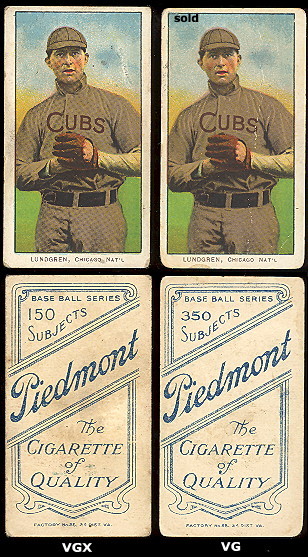
AL MVP candidate Albert Belle had been having a pretty quiet series, but led off the 7th with a double. Jim Thome, whose series had been even more quiet, followed that up with an RBI double, and as quickly as that the Cubs lead was gone. After a strike out of Eddie Murray, and an intentional walk to the ubiquitous Manny Ramirez, pinch hitter Herbert Perry hit a comebacker to Pfiester that was just too slow to be a double play, extending the inning. Pinch hitter Sandy Alomar took advantage, singling to center and scoring Thome. 2-1 Cleveland. Carl Lundgren ended the inning without further damage, but Chicago, 6 outs away from winning the championship, was now 6 outs away from losing it.

Dennis Martinez gave way in the 8th after allowing only three hits and the one run to the Cubs. Assenmacher and Plunk shut down Chicago in the top of the 8th, the rapidly-heating Thome added an insurance run in the form of a homer off of Lundgren.

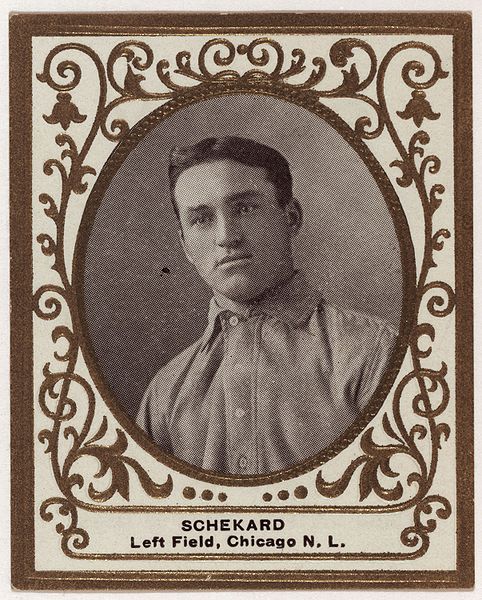
The Cleveland crowd went wild as Jose Mesa took the mound in search of his third save, to close out the Series. Unfortunately for them, this was Jose Mesa. Sheckard led off with a single and took second on fielder's indifference. With one out Chance walked, now representing the tying run with Steinfeldt and Schulte coming up. Mesa bore down, however and retired both, Schulte's popup to Baerga sealing the deal and making the 1995 Cleveland Indians the champions of the Cloverland League's Third Season.

Saturday, December 29, 2007

Championship Series, Game 6

The action switched back to Cleveland for Game 6. As expected, Ed Reulbach got the call for the Cubs in this must-win situation. The Indians opted to hold Dennis Martinez for Game 7 and trust in Charles Nagy to try and bring the Cloverland League championship to the Forest City.

The game was a taut one through 5. Chicago scratched out a run in the 2nd on a single by Johnny Kling (who took 2nd on a misplay by Manny Ramirez), a sacrifice by Frank Schulte, and a bloop single by Johnny Evers. The Indians threatened in the bottom of the inning, putting men on 2nd and 3rd with one out before Ramirez grounded hard to Tinker and Sorrento ended the inning with a strikeout.

Nagy ran into more trouble in the 6th, walking Steinfeldt to open the inning, who came around to score on a single by Schulte after a fielder's choice. Nagy again escaped without further damage thanks to yet another baserunner kill by Manny, who nailed Schulte at the plate after a single by Slagle to end the inning.

Nagy gave way to Alan Embree in the 7th, and Embree made the Indians' job much harder by walking the two men he faced, loading the bases. Julian Tavarez made matters that much worse by hitting Chance to drive in a run, giving up a single to Steinfeldt, and walking Kling before giving way himself to Assenmacher. One fielder's choice and one double play later, Cleveland had escaped, but with a 6-0 deficit.

Overall entered in the 8th and kept Cleveland down as the Cubs added another run off of Ken Hill in the 9th. In the end, Chicago held the Indians to 4 hits, setting up a climactic Game 7!
Carl Lundgren is slated to start for Chicago, Dennis Martinez for Cleveland. There was some speculation that Reulbach was lifted to allow him to pitch in relief in Game 7, but he's not likely to be available unless the Cubs have run out of pitchers.

Monday, December 24, 2007

Championship Series, Game 5

Rain! And more rain! The weather forced the cancellation of Game 5 in Chicago, and didn't allow a resumption the next day, either. Since there are no double-headers in post-season baseball, everything got forced a day later, screwing up everyone's travel and hotel reservations. Luckily, this is just a simulation. :)

It does, however, allow games to be played with the rotations. This will probably be seen for Game 6, but the best strategy will clearly depend on the situation after Game 5...

And this is a post about Game 5, though there's no evidence for that yet...

Knotted at two games a piece, the Cubs sent Miner Brown to the mound. While he was among the NL leaders in ERA during the season, his post-season has been less stellar: an ERA of 3.76 entering Game 5, with a 1-1 record. Since the Cubs have only been scoring 2.3 runs per game, this is not so good... The Indians countered with Orel Hershiser, whose postseason ERA of 1.19 augured much better results, or so the Cleveland fans hoped.

Chicago manufactured a run in the 2nd as the light-hitting Evers singled, stole 2nd, and scored on a single by the even lighter-hitting Slagle. The Cubs threatened to add more as Slagle stole 2nd and went to 3rd as Alomar's throw went into center field, but Hershiser ended the threat on Tinker's popout. Orel settled down thereafter, only allowing one more hit before being lifted for a pinch-hitter in the 7th.

To that point, Brown had been throwing a gem, shutting down the Cleveland offense. With Manny Ramirez on first after a walk, Eddie Murray doubled for Hershiser. Brown bore down, inducing a grounder from Kenny Lofton. Ramirez, going with contact, was gunned down at the plate by Tinker. Could the Cubbies escape?

Omar Vizquel said no. His single scored Wayne Kirby, running for Murray. Carlos Baerga followed with a double, putting the Indians up 3-1. Tempting fate, or perhaps addled, the Cubs challenged Albert Belle rather than walking him with first base open. Luckily for Chicago, Belle could not capitalize.

The Cubs tried to come back in the 8th, but aggressive baserunning did them in. Fred Schulte reached first on a dropped popup by Alomar, who then airmailed yet another throw into the outfield as Schulte stole 2nd. This time, however, Manny Ramirez' alert backup (those words have never been written before) caught Schulte trying to take the extra base.

So it came to the 9th and Jose Mesa, who promptly allowed a single to Frank Chance. After a Steinfeld popout, and Chance taking 2nd on fielder's indifference, Johnny Kling's single closed the score to 3-2. Cleveland took control thereafter, however, as Alomar finally caught a runner at 2nd and Mesa retired Evers. The Indians are one win away.

Game 6 will be back at Jacobs Field. The Cubs will pretty clearly have to start Reulbach in an attempt to keep their season alive. Cleveland, by contrast, will likely keep Dennis Martinez for a possible Game 7. It's likely Nagy will get the start in recognition of his yeoman work in the post-season so far.

Tuesday, November 20, 2007

Championship Series, Game 4

A fine autumn day in Chicago found another capacity crowd on hand for the Series. Down 2 games to 1, the Cubs put their trust in the right arm of Ed Reulbach, while the Indians countered with El Presidente, Dennis Martinez.

A triple by Frank Schulte and a sacrifice fly by Frank Chance put Chicago on the board in the bottom of the 1st inning. Martinez struck out Steinfeldt to escape further damage. In the 3rd, Wildfire struck again with another triple, driving in Sheckard. Chance drove him in again on a triple of his own, giving the Cubs a 3-0 lead.

Meanwhile, Reulbach was pitching in a way that would make even a 1-0 game insurmountable, and showing why he's one of the favorites to win the Cy Young award. Ed threw 4 innings of no-hit ball before Albert Belle doubled (and had the Indians' only extra-base hit), and was never particularly close to trouble. He was not dominant, striking out only 2, but Cleveland was unable to hit the ball with any authority.

Martinez gave way to Albie Lopez, making his first appearance since the epic ALCS finale, and finally Julian Tavarez. Both prevented further damage, though an errant pitch from Tavarez hit Chance in the 8th, knocking him out of the game. Chance is day to day.

In the end, Ruelbach made it look easy, getting the complete-game shutout and lowering his post-season ERA to 0.75 while improving his record to 4-0. With the win for Chicago, they even the series at 2 games a piece. The weather in Chicago looks iffy for Game 5, though of course the league offices will try and get the game in.... :)

Monday, October 29, 2007

Season 4 Expansion Teams:AL

The expansion teams for the American League are somewhat less distinguished than their NL equivalents. In constrast to the NL teams, all of which won at least the pennant save the 100-win Diamondbacks, only one of the AL teams even made the postseason, with one not even actually ever playing any major league games...

1982 Milwaukee Brewers:
Pretty much a toss-up between this team and the 1992 team, which consistently finished at or near the top of the qualification leagues by beating up on lesser Brewer teams. I finally played a 1600 game season between these two teams, which Harvey's Wallbangers won by a handful of games. On that basis, plus the relative merits of Yount, Molitor, Simmons, Fingers, Cooper, and Thomas vs. Yount, Molitor... um... Listach? Vaughn? It was an easy call. This team will probably get slaughtered when the season rolls around, but I don't think it'll be worse than the 1992 team would have done. Besides, the 1982 team won the pennant.

1969 Washington Senators: This team did not win the pennant. They finished 4th, a distant 23 games back. However, they did win 86 games, the only time this franchise was over .500 during their tenure in the District. Frank Howard was the big star, Ted Williams the manager. The Senators regressed the following year, and were in Texas shortly thereafter. I expect these guys to get slaughtered as well.

1958 Kansas City Athletics: Slaughter, that's where this team is going to be a Viking. Seventh place in real life, witha .474 winning percentage. But they're the best of the Kansas City A's franchise, and that franchise had a 13-year lifetime, plenty long enough to deserve representation. This is something of an experiment, just to see how such a team would do. They might be replaced in Season 5 with a KC A's all-star squad, but that's looking pretty far ahead. Bob Cerv was the big hitter for this team, which I suppose did finish closer to first place in terms of games behind than the Senators above did.

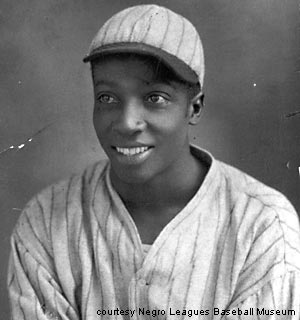
1937 Santo Domingo Dragons: This is the first team in the Cloverland Leagues that is... nontraditional, shall we say? This is based on a real-life Negro League all-star team that played in the Dominican Republic in a league organized by Trujillo. I'm not sure quite how this'll all work out- the players were grabbed from other teams (in the game sense, I mean, though in real life too), and they might be normalized oddly. But this is a game, I guess, so we'll just give it a shot. I suppose they might do extremely well, but I'd bet they'll be first-division but out of the playoffs. I guess it'll depend on what division they're in. If I go with chronologically-based
divisions, they'd probably end up with the '39 Yankees, '40 Tigers and '30 Athletics? Or the '58 A's? Potentially a very tough division, regardless. But with Satchel Paige, Josh Gibson, and Cool Papa Bell, the upside is very high...

The Dragons are the team that would likely be punted if things change, though it'll depend on the change. If the Brewers have an amazing season in 2008, the '82 team might drop out and a putative '08 team show up in the NL. I'm debating whether the would-be Fremont A's will count as separate from the Oakland version. It may depend heavily on what they call themselves. This expansion will leave only the Devil Rays as an unrepresented long-term team. A good season from them in '08 might put them in Season 4. Or it might lead me to wait, in anticipation of a better Rays team by the time of Season 5...

Sunday, October 28, 2007

Championship Series, Game 3

The action shifts to West Side Park in Chicago for Game 3 of the Series. Ron Santo was on hand to throw out the ceremonial first pitch after a brief rain delay, and the Old Styles were flowing. Knotted at a game a piece, the question remains as to which of these star-crossed franchises would provide this year's championship team.

Jack Pfiester took the hill for the Cubs, while Cleveland sent Charles Nagy to the mound, a move precipitated by the loss of Claude Ogea to injury during the ALCS. Indians fans prepared for the worst, as Nagy's regular season record did not give much cause for optimism (11-13, 4.67).

Cleveland struck first in the top of the 2nd as Manny Ramirez (there he is again) singled, moved to second on a fielder's choice, and scored on a throwing error by Joe Tinker. Pfiester bore down after that, but Nagy was pitching the game of his life, throwing 6 2-hit, shutout innings against the National League champions before being lifted for a pinch hitter. In the 8th, Albert Belle hit his first home run of the postseason, giving Cleveland a bit more breathing room.

They would need that breathing room. Chicago threatened against Poole in the 8th, putting two on by a walk to Slagle and a double by Tinker with one out before Solly Hoffman pinch hit for Pfiester. Hoffman sent the ball in the air to right, deep but not quite deep enough as Belle gave the Indians another baserunner kill to end the Cubs threat (and put the West Side Grounds into a stupor). In the 9th, Jose Mesa came on and got two quick outs before a single and miscue by Belle put Frank Chance on 2nd. Steinfeldt's single put the score at 2-1 with Cubs slugger Kling at bat, but Mesa managed to strike him out for the win.

The win put Cleveland up 2 games to 1 in the best-of-seven series. Game 4 will feature a rematch of Game 1's starters-- Ruelbach vs. Martinez.

Friday, October 26, 2007

Season 4 Expansion Teams:NL

Looking ahead to next season (whenever that will be-- sometime in 2008?), each league will add 4 more teams. I'll probably go with four divisions per league of five teams each, with two rounds of playoffs, but I haven't ruled out five divisions of four teams each, with a wild card and an extra round of playoffs.

The franchises represented here were relatively obvious teams to add. The specific teams were decided in the "usual" way, having all the candidates play one another in a qualification league. Still, one very team snuck in here at the end...

2007 Rockies: Before this month, it was looking like the 2000 team would be Colorado's entry. Though they finished a pretty mediocre 4th, they had the best run differential of any Rockies team. Happily, the current team came along, and in a head-to-head set of ~40 games they handily dispatched the 2000 entry. You know all about these guys. I don't know that they've got much of a chance (depending on the division they're in, I guess), but they're certainly not an embarrassment by any means.

1997 Marlins: World Series winners. They and the 2003 team were really the only competition for the Florida slot, and this team pulled it out. I wasn't a fan of either team, but I guess less Josh Beckett in the Cloverland Leagues is fine with me.

1999 Diamondbacks: Again, a happy acccident that Curt Schilling isn't around, though he's on the 1993 Phillies already. The 1999 team, only the second year for Arizona, stormed to their best record in the desert with over 100 wins (and even more expected). They lost in the playoffs but Randy Johnson had a great year. This is one of only two teams in the league that I've seen in person, the other being the 1986 Mets...

1896 Orioles: One of the most famous 19th century teams, and perhaps the only team in this group with a chance to win it all. They were the rivals of the Beaneaters, and are likely to end up in a killer division with Boston, Chicago, Pittsburgh and the New York Giants. Often considered the greatest team of all time (pre-1927 Yankees), this team was the last to bring a championship to Baltimore for 70 years.

Barring something crazy, these should be the teams added. There only a few other possibilities: the 1895 Cleveland Spiders, though the teams already present above trump them. If the Washington Nationals have an amazing season, they could displace somebody (Baltimore?). An amazing Milwaukee Brewers season could also do it, though that would cause issues for the American League... Finally, any moves on the part of the Marlins followed by an excellent season could cause their entrance, though all of these possibilities require me to be pretty pokey in getting things underway. Of course, that's a serious possibility...

Saturday, September 29, 2007

Championship Series, Game 2

Cleveland faced a must-win situation in Game 2-- after dropping the first game, they desperately did not want to travel to Chicago down 0-2. They turned to Orel Hershiser to try and hold the line, while the Cubs handed the ball to Miner Brown.

I suppose this is as good a place as any to note that if it's the Indians and Cubs in the 2007 World Series, I called it here (much as I'd rather see the Yankees, of course...). [note added later- I'm clearly wrong, though unhappily not because the Yankees made it...]

For the ceremonial first pitch, the Indians recognized their first world champions and honored Tris Speaker, manager of the 1920 team (which represented the franchise during Season 1 of the Cloverland Leagues).

Cleveland was able to score relatively quickly off of Brown, striking in the 2nd on singles by Eddie Murray and Paul Sorrento, followed up by an RBI double by the ubiquitous Manny Ramirez. The Cubs escaped the 2nd and 3rd, no outs situation without further damage, but the stage was set. The Indians scored again in the 5th on a double by Alvaro Espinoza and a triple by Kenny Lofton. A walk, a double, and a hit batsman led to another run for Cleveland and Brown's replacement by Carl Lundgren. After another walk and another hit batsman, Cleveland's lead had swollen to 4-0.

Meanwhile, Hershiser was rolling. Orel finished with 8 shutout innings and only allowed 2 hits. Jose Mesa finished with a 9th that was perhaps more dramatic than necessary, but in the end maintained the shutout. Jimmy Sheckard had 2 of Chicago's three hits. Cleveland knotted the series at 1 game a piece as action shifted to Chicago. Game 3 will feature Charles Nagy vs. Jack Pfiester.

Thursday, September 13, 2007

Championship Series, Game 1

The Series!

A capacity crowd welcomed their pennant-winning Indians home, hoping they could do what they could not do in 1995: win it all. Larry Doby threw out the ceremonial first pitch for Cleveland, and with that, the game was underway.

Game 1 pitted Dennis Martinez for the Indians vs. Ed Ruelbach for the Chicago Cubs. Ruelbach was the MVP for Chicago in the NLCS, who had a long layoff waiting for the end of the Yankees-Indians series.

Despite the difference in preparation, the two pitchers matched each other through five scoreless innings. Martinez worked in and out of trouble, loading the bases in the 1st before being saved by a Johnny Kling double play grounder. Ruelbach only allowed on base hit in five innings, but had control problems that led him to walk a few and take advantage of two double plays behind him.

In the 6th, Chicago broke through against El Presidente. A single by Steinfeld was followed by an RBI double by Kling, who scored on an infield single by Evers, following a sacrifice by Schulte. Cleveland came right back in the bottom of the inning, as a two out double by Baerga plated Kenny Lofton (ending Ruelbach's shutout streak at 22 2/3 innings), and Albert Belle drove Baerga in immediately after. Eddie Murray had a chance to break the game open after Ruelbach hit Thome (who is expected to miss 2-3 games), but he flied out to center, preserving the tie.
Martinez got in to further trouble in the 8th, putting runners on 1st and 3rd via a Steinfeld walk and a Kling single. Paul Assenmacher was called in from the pen to try and hold the Cubs down, but immediately gave up an RBI single to Wildfire Schulte. Assenmacher shut down Chicago afterward, but the damage was done. Ruelbach shut down the Indians the rest of the way, finishing the game with a strikeout of ALCS MVP Ramirez.
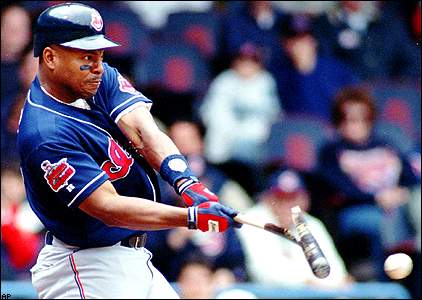
Cleveland hopes to even up the series in Game 2, pitting Orel Hershiser against Mordecai Brown, again in Cleveland.